SkinCeuticals vs Paula's Choice: Which Suits Your Routine?
Beverly Hills ·

Last Updated: November 17, 2026
Quick Summary
The right choice between skinceuticals vs paula's choice depends on your skin, your main concern and your budget, since neither brand is universally better. Compare vitamin C serums on their stated form, concentration, pH and packaging rather than the headline percentage alone.
- Compare vitamin C products by chemical form, pH, packaging and supporting antioxidants, not just the percentage.
- Paula's Choice C15 Super Booster states a 15% vitamin C concentration on its name.
- Compare cost per millilitre rather than headline price, after checking current prices on each brand's site.
- Layering two vitamin C serums in one routine is not recommended; use one vitamin C product per morning.
- Patch test any new serum on a small area for several days before using it across the face.
Table of Contents
- SkinCeuticals vs Paula's Choice: The Short Answer
- How the Two Brands Are Positioned and Priced
- Paula's Choice vs SkinCeuticals Vitamin C
- SkinCeuticals vs Paula's Choice Retinol: What Differs
- Hyaluronic Acid and Exfoliants: Paula's Choice vs SkinCeuticals
- How to Choose a Vitamin C Serum for Your Skin
- Choosing Between Them for Your Routine and Budget
- Frequently Asked Questions
SkinCeuticals vs Paula's Choice: The Short Answer
Both brands sell serious skincare, but they serve different routines. Neither brand is universally better. The right choice depends on your skin, your concern and what you are prepared to spend. For a fuller look at how a Beverly Hills routine compares, see our ingredient guide.
How the Two Brands Are Positioned and Priced
Because prices, sizes and availability change, we recommend checking each brand's official site for current figures. Comparing cost per millilitre, rather than the headline price, gives a fairer picture of what you actually pay for each product.
Paula's Choice vs SkinCeuticals Vitamin C
Vitamin C is one of the most common points of comparison for serums, and it is where formulation details matter most.
What each brand actually puts in the bottle
Paula's Choice sells vitamin C in several formats, including the C15 Super Booster, whose name states a 15% vitamin C concentration. Paula's Choice also publishes full ingredient lists and the form of vitamin C used in each product, which makes it straightforward to compare like for like. The form matters: L-ascorbic acid, sodium ascorbyl phosphate, magnesium ascorbyl phosphate, ascorbyl glucoside and tetrahexyldecyl ascorbate are not interchangeable, and the published evidence for each is different in both quality and quantity.
Why the percentage alone tells you very little
A serum's performance depends on the exact formulation, not the headline number. Four factors do most of the work:
- Chemical form. L-ascorbic acid is the form most studied in topical serums, but it is also the least stable. Derivative forms are more stable but the evidence for their conversion to ascorbic acid in skin is more limited.
- pH. L-ascorbic acid needs a low pH to be absorbed effectively, and that low pH is also what makes some formulas sting on sensitive skin.
- Packaging. Light and oxygen degrade vitamin C. An opaque, air-restricted container (pump or dropper with a narrow neck) protects the formula better than a wide-mouth jar.
- Supporting antioxidants. Vitamin E and ferulic acid are the best-documented partners for L-ascorbic acid; other formulas use different stabilisers.
How to read the label before you buy
Look for three things on the product page: the form of vitamin C, the stated concentration (if published), and the packaging. If a brand does not state the form, that is a signal to ask before buying. If it states a percentage but not the form, the percentage is not yet meaningful.
For a route into vitamin C with a published concentration, you can also look at our vitamin C serum, which lists its active levels openly and states the form used. If you are new to vitamin C, our ingredient guide explains how to introduce it without irritating your skin.
The two brands' vitamin C products differ in ways that matter more than the headline percentage, so the key formulation details are summarised below.
| Factor | Why it matters | What to check |
|---|---|---|
| Chemical form | L-ascorbic acid is most studied but least stable | Form named on the label |
| pH | Low pH aids absorption but can sting | Sensitivity on your skin |
| Packaging | Light and oxygen degrade vitamin C | Opaque, air-restricted container |
| Supporting antioxidants | Vitamin E and ferulic acid are well documented | Whether they are included |
| Stated concentration | Percentage is meaningful only with the form | Form and percentage stated together |
SkinCeuticals vs Paula's Choice Retinol: What Differs
Retinol is a different category of active, and the two brands' offerings reflect that. If you are considering retinol, check the exact concentration, the form of retinoid and the vehicle on each product page. Introduce retinol gradually, and do not combine it with strong exfoliants in the same routine without guidance. For a broader look at how actives fit together, see our how to use retinol and vitamin C together guide.
Hyaluronic Acid and Exfoliants: Paula's Choice vs SkinCeuticals
Hydration and exfoliation are where most routines start, and they are also where the two brands' ranges diverge most clearly. It is more useful to explain what each category does and how to choose within it.
Exfoliants: what each brand offers
The more useful question when choosing an exfoliant is which acid, at which strength, in which format suits your skin.
How to choose an exfoliant
- Oily or blemish-prone skin: a leave-on salicylic acid (BHA) is the conventional starting point. Begin with a lower frequency and build up.
- Dull or uneven tone: an alpha hydroxy acid (AHA) such as glycolic or lactic acid is often used, and the evidence base for AHAs in improving the appearance of tone and texture is reasonable.
- Sensitive skin: a gentler AHA (lactic acid) or a lower-strength BHA, introduced slowly, is usually better tolerated than a strong glycolic product.
Watch out: layering an exfoliating acid with retinol in the same routine increases the risk of irritation. If you use both, separate them (for example, acid in the morning and retinol at night, or alternate evenings) and introduce one at a time.
Hydration: hyaluronic acid and beyond
Hyaluronic acid is a humectant: it draws water into the upper layers of skin and helps skin look plump and hydrated. Hyaluronic acid products vary in molecular weight, concentration and what else is in the formula. Lower-molecular-weight hyaluronic acid penetrates further; higher-molecular-weight forms sit closer to the surface. Many formulas combine several weights, and the published evidence for the ingredient as a humectant is solid, though it is not a treatment for any skin condition.
If you want a single-ingredient hydration option, our hyaluronic acid serum is four ingredients and fragrance free, which makes it easy to layer with other actives. An acid-based alternative for texture is our fruit acid gel. Start one active at a time so you can judge how your skin responds, and see our routine guide for how to sequence hydration and exfoliation without overloading your skin.
How to Choose a Vitamin C Serum for Your Skin
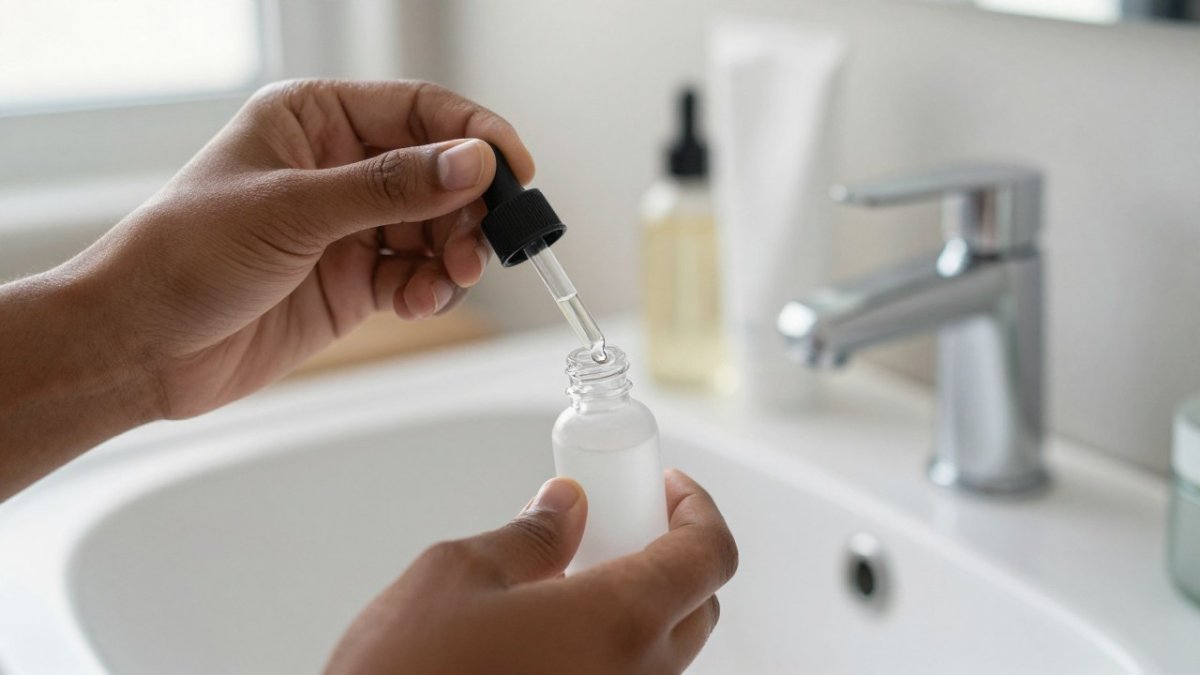
A good vitamin C serum should list its form and strength clearly, and it should be packaged to limit oxidation. L-ascorbic acid is the form most studied in topical serums, but stability and pH matter as much as the percentage. Oily or sensitive skin may tolerate a lower strength better when first starting. Patch test any new serum on a small area for several days before using it across the face.
Choosing Between Them for Your Routine and Budget
The sensible way to decide is to start with your main concern, then match the active to it. If you want an antioxidant serum, compare vitamin C products on formulation and packaging. If you want exfoliation, compare acid strength and format. If you are on a tighter budget, buy one product that solves one problem well, rather than a full range. Our alternatives guide for sensitive skin covers gentler options worth comparing before you commit. Check current pricing directly with each brand, and keep a simple record of how your skin changes over several weeks.
Frequently Asked Questions
Is SkinCeuticals better than Paula's Choice?
Neither brand is better across the board. The better choice depends on the active you need, your skin type and how much you are prepared to spend per use. Compare the published ingredient lists and concentrations on each product page before deciding.
How does Paula's Choice vitamin C compare with SkinCeuticals C E Ferulic?
Both are vitamin C serums, but they differ in formulation and positioning. Paula's Choice C15 Super Booster is published as a 15% vitamin C product, while SkinCeuticals C E Ferulic is a well-known antioxidant serum that combines vitamin C, vitamin E and ferulic acid. Check the current ingredient list and concentration on each brand's website, as formulas can change. Whichever you choose, patch test first and use sunscreen during the day.
Are Paula's Choice products suitable for sensitive skin?
Suitability for sensitive skin varies by product and by person. Strong exfoliants may irritate skin that is already sensitised. Read the product description, start with a lower-strength option, and patch test on a small area before full use. If your skin reacts badly, stop using the product and seek advice from a pharmacist or dermatologist.
Can Paula's Choice and SkinCeuticals products be used in the same routine?
They can sometimes be combined, but layering depends on the specific actives. Acidic vitamin C serums and exfoliating acids can both be irritating when used together, so many people use them at different times of day. Follow the directions on each product and avoid stacking several strong actives at once. For guidance on building a simple routine, see /routine.
 Add mybevhills.com as a preferred source on Google →