How to Treat Shave-Stressed Skin: A Step-by-Step Guide
Beverly Hills ·
Last Updated: November 15, 2026
Quick Summary
Shave-stressed skin is skin irritated by the blade or shaving method, and it usually settles within a day or two. To treat it, rinse with lukewarm water, pat dry, apply a cool compress, then use a fragrance-free moisturiser and avoid shaving or strong products until the redness fades.
- Rinse with lukewarm water, since hot water can make redness and stinging worse.
- Apply a cool compress for a few minutes, cool rather than icy.
- Use a plain, fragrance-free moisturiser and smooth it on gently rather than rubbing.
- Wait until the area feels comfortable and looks close to its normal colour before shaving again.
- See a doctor or pharmacist if a spot becomes painful, swollen, warm or leaks pus.
Table of Contents
- What Shave-Stressed Skin Is and Why It Happens
- How to Treat Shave-Stressed Skin on Face: Immediate Steps
- How to Treat Shave-Stressed Skin Overnight
- Soothing Ingredients Compared: Aloe, Ceramides and Panthenol
- How to Treat Shave-Stressed Skin on Legs
- How to Treat Razor Burn on the Pubic Area Safely
- Preventing Irritation Before Your Next Shave and When to See a Doctor
- Building a Gentle Routine for Shave-Stressed Skin
- Frequently Asked Questions
What Shave-Stressed Skin Is and Why It Happens
Shave-stressed skin is skin that has been irritated by the blade, the shaving method, or both. Redness, tenderness, a stinging or burning feeling, and small raised bumps are the most common signs.
Shaving removes hair at skin level. The blade also drags across the outer layer of skin, which is the part that holds moisture and protects against irritants. When that outer layer is disrupted, skin can lose water more easily and react more quickly to the next pass of the razor, soap, or fragrance.
Several factors can make the problem worse:
- Dull or used blades that tug rather than glide
- Shaving against the direction of growth, which cuts hair below the surface
- Several passes over the same patch of skin
How Razor Burn, Razor Bumps and Ingrown Hairs Differ
These three terms are often used interchangeably, but they are not the same problem. Knowing which one you have changes what you should do.
- Razor burn is general inflammation across the shaved area. The skin looks red and feels hot or stinging, and it usually appears within hours of shaving.
- Razor bumps are small, raised, often itchy spots where hair has curled back and become trapped under the skin. They are common in areas with curly hair.
- Ingrown hairs are individual hairs that have grown back into the skin. They often look like a single firm bump, sometimes with a visible hair loop beneath the surface.
Redness that spreads across the area is usually razor burn. Individual bumps that appear a few days after shaving point more toward razor bumps or ingrown hairs. If a spot becomes painful, swollen, warm, or starts to leak pus, that is a sign of infection and should be checked by a doctor or pharmacist rather than treated at home.
How to Treat Shave-Stressed Skin on Face: Immediate Steps
Treat the skin gently as soon as you notice irritation. For guidance on applying a serum correctly, see the application guide. The goal is to calm the surface, cool it down, and stop adding stress to it.
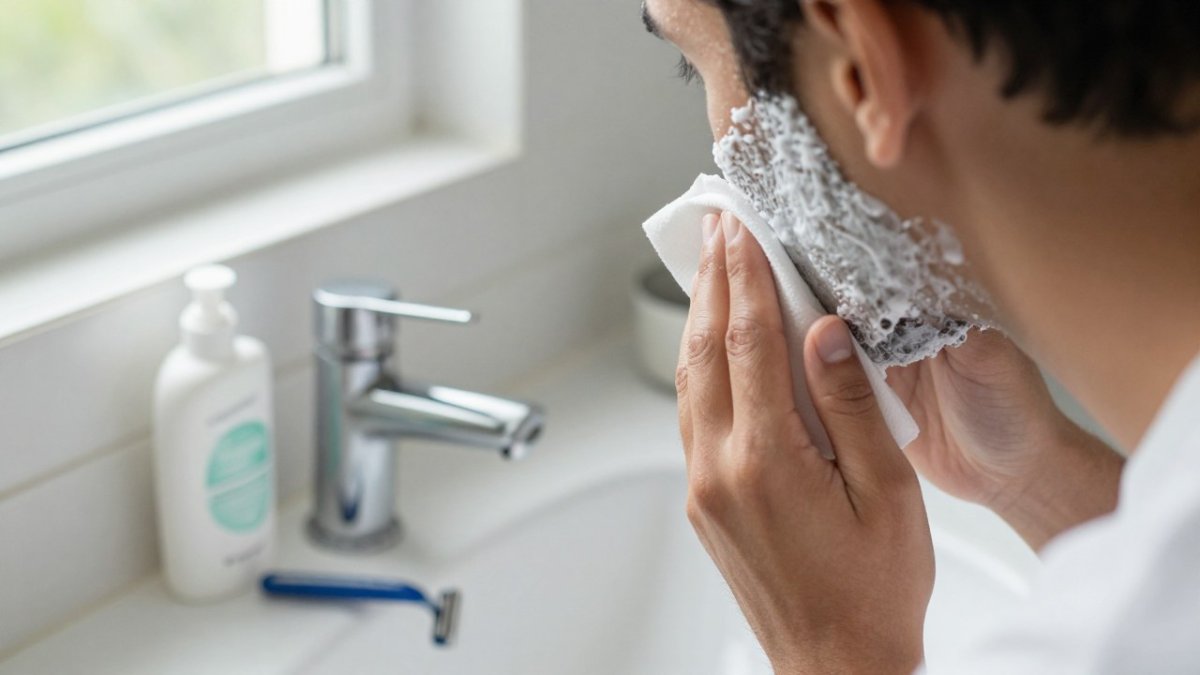
- Rinse with lukewarm water. Avoid hot water, which can make redness and stinging worse.
- Pat dry. Do not rub the skin with a towel.
- Apply a cool compress. Hold a clean, damp cloth that has been cooled in the fridge against the skin for a few minutes. Cool, not icy, is the goal.
- Apply a fragrance-free moisturiser. Choose a plain formula with few ingredients. To understand how to read ingredient lists and judge active percentages, see how to verify active ingredient percentages. Gently smooth it on rather than rubbing.
- Leave the skin alone. Avoid scrubbing, picking at bumps, or applying strong actives until the redness settles.
A simple routine is enough for the first day: cool compress, then a light moisturiser, then no further shaving. If the skin still feels tight or stings after an hour or two, a plain cream with no added fragrance is usually the safest next step.
How to Treat Shave-Stressed Skin Overnight
Overnight, the aim is to remove friction and irritants and leave the skin undisturbed while it settles. A staged approach is more useful than a single checklist, because what you do on the first night is different from what you do on night three.
Night one: calm and protect
- Cleanse gently with a mild, non-foaming cleanser and lukewarm water. Hot water increases blood flow to the surface and can make redness look worse in the morning.
- Pat dry with a clean towel and wait a minute so the skin is not damp when you apply the next layer.
- Apply a thin layer of a fragrance-free barrier cream or a plain moisturiser containing ceramides or glycerin. These help keep the skin's outer layer comfortable while it settles.
- Skip exfoliants, retinoids and strong acids for the night. Ingredients that are fine on healthy skin may sting on irritated skin.
- Use a clean pillowcase and, if you sleep on your side, try to avoid pressing the irritated area into the fabric.
Watch out: if a product stings or burns on contact rather than feeling neutral, rinse it off and use a simpler formula. Stinging is a signal, not a normal part of treatment.
Nights two to three: support the barrier
If redness has faded but the skin still feels tight or looks slightly rough, keep the routine plain and add nothing new. Continue the fragrance-free moisturiser morning and night. This is not the moment to introduce a new serum, even a gentle one, because a reaction now is hard to tell apart from the original irritation.
When to resume shaving
A common pattern is that mild razor burn settles within 24 to 48 hours, while razor bumps and ingrown hairs can take several days to a couple of weeks. Use the skin, not the calendar, as your guide:
- Safe to shave again when the area feels comfortable to touch, looks close to its normal colour, and has no open or weeping spots.
- Wait longer if the skin still stings when you apply moisturiser, or if bumps are still raised and tender.
- Do not shave over a bump that is hot, painful, or has a visible head of pus.
When you do resume, treat the first shave as a test: use a fresh blade, shave with the grain only, and skip any exfoliating product for a few more days. If irritation returns quickly, give the skin another rest and consider whether the blade, the technique, or the hair type is the underlying cause. For a broader routine to keep the barrier supported between shaves, see the routine guide.
Soothing Ingredients Compared: Aloe, Ceramides and Panthenol
Several ingredients are commonly used in products for irritated skin, and each has a different role. The table below compares the ones most often found in aftershave balms and soothing moisturisers, followed by guidance on which to seek and which to avoid depending on your skin.
| Ingredient | What it does | Best suited for | Things to know |
|---|---|---|---|
| Aloe vera | Adds water and a cooling feel to the skin | Mild redness and stinging | Choose a product where aloe is listed high on the ingredients list; patch-test if you have not used it before |
| Ceramides | Support the skin's natural barrier and help hold in moisture | Dry, tight or repeatedly irritated skin | Work best as part of a regular moisturising routine rather than a one-off application |
| Panthenol (vitamin B5) | Helps moisturise and supports skin comfort | Tender or reactive skin | Generally well tolerated, though sensitivity can occur |
| Glycerin | Draws water into the outer layer of skin | Almost all skin types | A common, simple humectant that pairs well with ceramides |
| Colloidal oatmeal | Commonly used in products for dry, itchy or irritated skin | Larger areas such as legs | Look for it in fragrance-free formulations |
| Allantoin | Used in soothing products for its skin-comforting properties | Tender or reactive skin | Often combined with panthenol in aftershave balms |
No single ingredient works on its own as a cure. For most people, a plain, fragrance-free moisturiser containing one or more of these is enough.
Ingredients to seek out by skin sensitivity
- Reactive or allergy-prone skin: favour short ingredient lists, fragrance-free formulas, and single humectants such as glycerin. Introduce one new product at a time so you can identify the cause if a reaction occurs.
- Dry or tight skin: ceramides and glycerin together help support the barrier and hold water in the outer layer.
- Oily or combination skin: a light lotion with glycerin and panthenol is usually more comfortable than a rich cream, which can feel occlusive on oily areas.
Ingredients to approach with caution
- Fragrance and essential oils, including menthol and peppermint, which are common in cooling aftershaves but can sting on compromised skin.
- Alcohol denat, which appears in many toners and aftershaves and can feel drying on irritated skin.
- Exfoliating acids such as glycolic and salicylic acid, which are useful once the skin has settled but not while it is red or broken.
Watch out: a product marketed as "soothing" can still contain fragrance or alcohol. Check the ingredient list rather than the front of the pack.
If you want to build a simple routine once the irritation has settled, see the guide for general advice on choosing products.
How to Treat Shave-Stressed Skin on Legs
Legs are shaved more often and over larger areas, so irritation tends to build up.
- Shower with lukewarm water and let the skin soften before shaving.
- Use a fresh, sharp blade and a generous layer of shaving gel or cream.
- Shave in the direction of hair growth, using short, light strokes.
- Rinse the blade often and avoid going over the same patch repeatedly.
- After showering, pat the legs dry and apply a fragrance-free moisturiser while the skin is still slightly damp.
If bumps appear on the legs, especially on the thighs or calves, give the skin a few days without shaving and keep it moisturised. Once redness has settled, gentle exfoliation may be an option, but do not scrub broken skin.
How to Treat Razor Burn on the Pubic Area Safely
The pubic area has thin, sensitive skin and is especially prone to irritation and bumps. Care should be gentle.
- Use a cool compress for a few minutes to reduce heat and stinging.
- Avoid perfumed products, including scented wipes, soaps and sprays, which can make the area sting.
- Pat dry carefully and apply a plain, fragrance-free moisturiser.
- Wear loose cotton underwear to reduce friction while the skin heals.
- Give the area a rest from shaving until it feels comfortable again.
Do not apply strong acids, scrubs or products made for other body areas to this skin. If the area becomes painful, swollen, or shows signs of infection, see a doctor or pharmacist promptly.
Preventing Irritation Before Your Next Shave and When to See a Doctor
Prevention matters more than treatment. A few habits make a real difference:
- Shave after a warm shower, when hair is softer
- Use a clean, sharp blade and replace it when it starts to pull
- Use a good lubricant such as shaving gel rather than dry shaving
Seek medical advice if:
- Redness, swelling or pain gets worse after a few days
- A bump becomes hot, painful, or fills with pus
- You notice fever or the irritation spreads
These can be signs of infection or another condition that needs proper assessment.
Building a Gentle Routine for Shave-Stressed Skin
A simple, consistent routine works better than a long list of products. For a routine designed around oily sensitive skin, see skincare routine for oily sensitive skin. Once the immediate irritation has settled, a basic plan might look like this:
Morning
- Gentle cleanser
- Fragrance-free moisturiser
Evening
- Gentle cleanser
- Moisturiser containing ceramides, panthenol or glycerin
On shaving days
- Lukewarm shower
- Fresh blade and shaving gel
- Cool rinse and pat dry
Keep the routine simple for at least a week or two. If you want to add exfoliating products or stronger actives later, introduce them one at a time and stop if irritation returns.
Frequently Asked Questions
How do you soothe skin after shaving?
Rinse the area with lukewarm water, then pat it dry with a clean towel rather than rubbing. Apply a cool, damp cloth for a few minutes to ease heat and tenderness. Once the skin feels calm, use a fragrance-free moisturiser or a simple emollient to support the skin barrier. Avoid alcohol-based aftershaves, scrubs and hot water until the redness has settled, as these can prolong irritation. If the skin still stings or looks swollen after a day or two, reduce shaving and check the guidance on when to seek medical advice.
How can I treat shave-stressed skin overnight?
Before bed, cleanse gently and pat the skin dry. Apply a thin layer of a fragrance-free moisturiser or a basic emollient containing ingredients such as ceramides or panthenol to help the skin feel comfortable. Avoid exfoliating, retinoids or acids on the same night, as these can add to irritation. Overnight repair is limited, so most shave-stressed skin takes one to several days to settle, and the aim is to keep the area clean, hydrated and undisturbed.
How do you tell razor burn from razor bumps?
Razor burn usually appears as widespread redness, stinging and a rash-like feel shortly after shaving, and it often fades within a few days. Razor bumps, also called pseudofolliculitis barbae, are small raised spots caused when a cut hair curls back into the skin, and they may persist for longer. Ingrown hairs look like a single trapped hair under the surface. Pus, spreading warmth or fever suggest infection and need a doctor's assessment.
When should I seek medical advice for a shaving rash?
See a doctor or pharmacist if the rash lasts more than a week despite gentle care, if the skin becomes increasingly painful, swollen or hot, if you notice pus or yellow crusting, or if you develop a fever. These can be signs of infection. People with diabetes, eczema, or a history of skin infections should seek advice sooner. Do not attempt to squeeze or pick bumps, as this can spread infection.
 Add mybevhills.com as a preferred source on Google →