How to Build a Minimalist Skincare Routine for Ageing Skin
Beverly Hills ·

Last Updated: November 8, 2026
Quick Summary
A minimalist skincare routine for ageing skin uses fewer products, each with a clear job: a gentle cleanser, a moisturiser matched to your skin type, and daily broad-spectrum sun protection. One or two targeted treatments can be added once the basics are in place. Fewer steps also make it easier to see which product is actually helping.
- Cleanse gently; over-cleansing is a common cause of dryness and irritation.
- Choose moisturiser texture by skin type, not by age.
- Apply broad-spectrum SPF every morning, even on cloudy days.
- Use roughly two finger-lengths of sunscreen for the face and neck.
- Add one new product at a time and wait a week or two between additions.
Table of Contents
- What a Minimalist Skincare Routine Means for Ageing Skin
- The Core Steps: Cleanse, Moisturise and Protect
- Setting Up a Simple Morning and Evening Skincare Routine
- Choosing Targeted Treatments Without Overcomplicating Your Routine
- Introducing New Products Safely and Patch Testing
- How Long Does It Take to See a Difference?
- Putting Your Minimalist Routine Into Practice at Home
- Frequently Asked Questions
What a Minimalist Skincare Routine Means for Ageing Skin
A minimalist skincare routine uses fewer products, each chosen for a clear job. For ageing skin, that usually means a gentle cleanser, a moisturiser, daily sun protection and one or two targeted treatments.
Simpler does not mean careless.
Fewer products can make it easier to spot what is working. When a routine has six steps, a change in the skin could come from any of them.
The Core Steps: Cleanse, Moisturise and Protect
Every minimalist routine rests on three basics. Each one does a different job, and each one has a few practical choices worth getting right.
Cleanse: gentle beats thorough
A cleanser's job is to remove oil, sweat, sunscreen and pollution without stripping the skin barrier. For ageing skin, which tends to be drier and more reactive, a gentle non-foaming or low-foaming cleanser is usually the better default.
- Dry or very dry skin: a cream or milk cleanser, rinsed or wiped off, helps avoid that tight after-wash feeling.
- Oily or combination skin: a gentle gel cleanser is fine, but avoid harsh scrubs and high-alcohol formulas.
- Sensitive or reactive skin: fragrance-free, minimal-ingredient cleansers reduce the number of things that can provoke a reaction.
Watch out: cleansing twice in the morning is rarely necessary. For most people, a rinse with lukewarm water in the morning and a proper cleanse in the evening is enough, and over-cleansing is a common cause of dryness and irritation.
Moisturise: match the texture to your skin
A moisturiser supports the skin barrier and helps skin look and feel hydrated. The right texture depends on your skin type rather than your age:
- Dry skin: a richer cream with occlusive ingredients (such as squalane, shea butter or dimethicone) helps reduce water loss.
- Oily skin: a lighter lotion or gel-cream is usually more comfortable and less likely to feel heavy.
- Sensitive skin: fewer ingredients and no added fragrance is a reasonable starting point.
Humectants such as glycerin and hyaluronic acid draw water into the upper skin layers; emollients soften; occlusives seal. A well-formulated moisturiser usually combines more than one of these, which is why texture and ingredient list matter more than the word "moisturiser" on the label.
Protect: the step that does the most work
Apply a broad-spectrum sunscreen every morning, even on cloudy days (the WHO). Sun exposure is one of the main drivers of visible ageing, so daily protection is often the most useful single step in any routine, more so than any serum.
Practical guidance that is easy to follow:
- Amount: most guidance suggests roughly two finger-lengths of product for the face and neck. Most people apply less than this, which reduces the protection actually achieved.
- Broad spectrum: look for a label that states broad-spectrum UVA and UVB protection.
- Reapplication: for everyday indoor life, a morning application is often enough; for time outdoors, reapply every couple of hours.
- Under makeup: a sunscreen layered under makeup works, but the amount applied is often too small, a dedicated SPF product applied first is more reliable.
If you add only one thing to a basic routine, many dermatology sources would suggest daily sunscreen first. You can read more about sun protection guidance from the American Academy of Dermatology's sunscreen guidance.
A quick skin-type reference
| Skin type | Cleanser | Moisturiser | SPF note |
|---|---|---|---|
| Dry | Cream or milk | Richer cream with occlusives | A hydrating SPF or SPF over moisturiser |
| Oily | Gentle gel | Light lotion or gel-cream | Lightweight, non-greasy SPF |
| Sensitive | Fragrance-free gentle cleanser | Minimal-ingredient cream | Mineral or fragrance-free SPF |
| Combination | Gentle gel or milk | Lotion, adjusted by season | Lightweight SPF |
This table is a starting point, not a rule. Skin changes with season, medication and health, so adjust as your skin responds.
Setting Up a Simple Morning and Evening Skincare Routine
A simple routine has two parts, and each one has a different purpose.
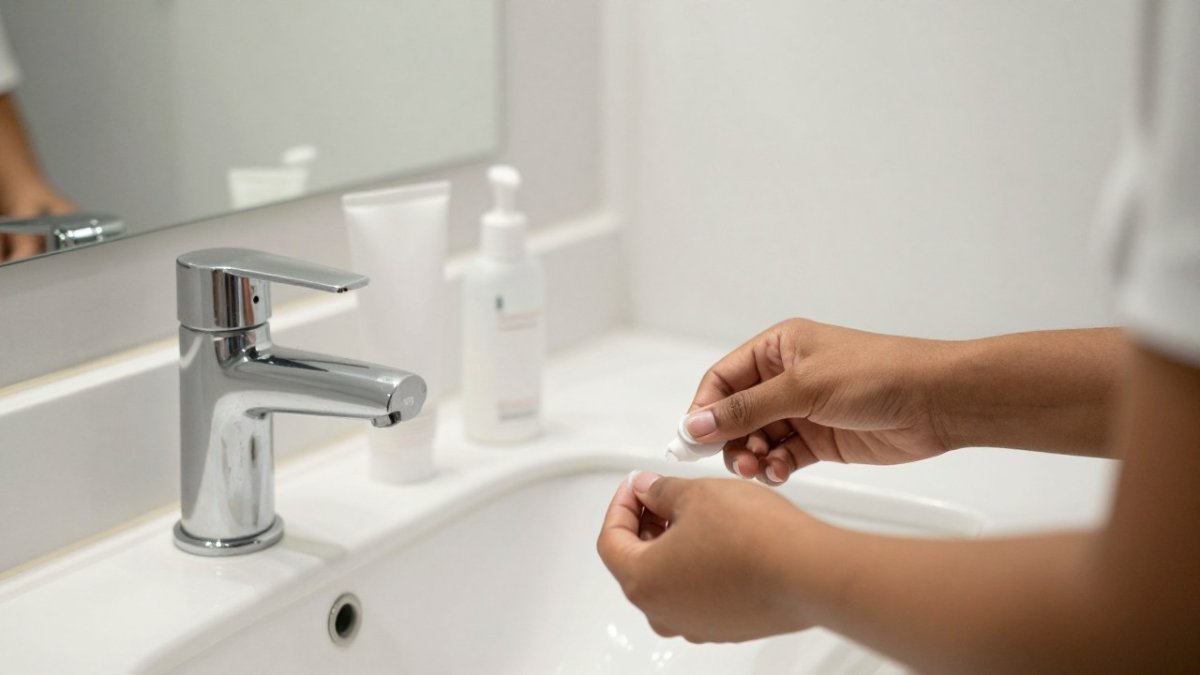
Morning routine:
- Cleanse lightly with water or a gentle cleanser.
- Apply a serum if you use one, such as a vitamin C serum for daytime antioxidant support.
- Apply moisturiser.
- Finish with broad-spectrum SPF.
Evening routine:
- Cleanse to remove sunscreen, makeup and the day's build-up.
- Apply a targeted treatment on alternate nights if needed.
- Apply moisturiser to support overnight repair.
Keep the order simple: thinnest products first, thickest last. Many people find a routine they can repeat without thinking is worth more than a complicated one they skip.
Choosing Targeted Treatments Without Overcomplicating Your Routine
Targeted treatments are optional. Most people only need one or two, chosen for a specific concern. The useful question is not "which actives are best?" but "which one concern should I address first, and what can my skin tolerate?"
Prioritise by concern, not by ingredient
A practical way to choose is to start from the concern that bothers you most, then pick the ingredient with the best evidence for that concern:
- Dullness and uneven tone: vitamin C is the most commonly used daytime antioxidant. Evidence for its role in supporting skin appearance is well established at the ingredient level, though finished-product results depend on the formulation, concentration, pH and stability.
- Dryness and the look of fine dehydration lines: hyaluronic acid and glycerin are humectants that help skin look plumper. They support hydration rather than changing skin structure.
- Fine lines and texture: retinoids have the strongest ingredient-level evidence base of the commonly used actives, but they are also the most likely to cause irritation, especially in the first weeks.
- Eye-area concerns: dark circles and puffiness are often better served by a dedicated eye product than by layering facial actives near the eye, where skin is thinner and more reactive.
Pick one concern and give it several weeks before adding a second active. To judge the percentages and stability of what you are considering, see how to verify active ingredient percentages in skincare. Layering several at once raises the chance of irritation and makes it harder to tell what is helping.
If you cannot tolerate retinoids
Retinoids are not suitable for everyone. Some people find them too irritating, some are pregnant or breastfeeding and advised to avoid them, and some simply prefer a gentler approach. A balanced view:
- Start low and slow if you do use one. A common pattern is to begin with a low-strength retinoid two or three nights a week and build up as tolerance allows. This is general guidance; follow the product's own instructions.
- Gentler alternatives include peptides (which vary widely in mechanism and evidence), niacinamide (used for tone and barrier support), and hydrating actives. None of these is a like-for-like substitute for a retinoid, and claims should be judged on the specific ingredient and formulation rather than the category.
- Barrier-first approach: if your skin is reactive, spend a few weeks on cleansing, moisturising and SPF before introducing any active. A calm barrier tolerates actives better.
Watch out: if you have a diagnosed skin condition such as rosacea or eczema, or you are unsure whether an active is appropriate, speak to a doctor or dermatologist before starting.
Read the label, not the marketing
For any active, the useful details are the ingredient form, the stated concentration (where published), the pH where relevant, and the packaging (which affects stability for ingredients such as vitamin C). A product that publishes its concentrations is easier to judge than one that does not. For a quick guide to reading labels, see how to read skincare ingredient labels.
Where a focused product fits
If your main concern is the eye area, a dedicated eye product is often more sensible than applying a facial active close to the eye. Beverly Hills publishes the concentrations of its key actives. For example, the DCX Eye Serum contains 5% iCaffeine. That is a formulation fact, not a claim that the finished product eliminates puffiness. For guidance on how the range fits into a short routine, see the Beverly Hills morning and evening routines.
Introducing New Products Safely and Patch Testing
Add one new product at a time. For a routine designed around sensitive, oily skin, see a skincare routine for oily sensitive skin. Wait at least a week or two before adding another, so you can see how your skin responds.
A simple patch test can help:
- Apply a small amount to a discreet area, such as behind the ear or along the jawline.
- Check for redness, itching, stinging or swelling over 24 to 48 hours.
- If there is no reaction, you can try it on the face more widely.
This matters more for sensitive or reactive skin. If you have a condition such as eczema or rosacea, or if a reaction does not settle, speak to a doctor or dermatologist before continuing.
How Long Does It Take to See a Difference?
Most skincare changes take weeks to months to show. For broader expert guidance on realistic timelines and using actives over time, see expert notes on skin, actives and routine. Moisturisation can improve how skin feels and looks within days. Changes to fine lines, tone and texture usually take several weeks to months of consistent use.
Realistic expectations help. A minimalist routine will not change skin overnight, and no product can reverse ageing. Track your skin with photos taken in the same light every four weeks. That gives you a fairer picture than memory alone.
Putting Your Minimalist Routine Into Practice at Home
Start small. Choose a gentle cleanser, a moisturiser and a daily SPF. Use them for four weeks before adding anything else.
Keep the products where you will use them, such as beside the sink. Set a reminder for your SPF if mornings are busy. Once the basics are habit, add one targeted treatment if you need it.
For application guidance on any Beverly Hills product, see the Beverly Hills application guide before your first use. For broader routine ideas, the Beverly Hills morning and evening routines show how the range fits together.
Frequently Asked Questions
What is the most effective skincare routine for ageing skin?
There is no single routine that suits every person, but a consistent basic routine is the most dependable starting point. Cleansing gently, moisturising to support the skin barrier and using a broad-spectrum sunscreen every morning covers the steps with the strongest general support. Targeted actives such as retinoids or vitamin C can be added once the basics feel comfortable. Skin tolerance, existing concerns and any advice from a qualified professional should guide what you add. Changing too many products at once makes it hard to tell what is helping or irritating your skin.
How long does it take to see a difference from a skincare routine?
Changes in hydration and skin feel can sometimes be noticed within days, while changes in fine lines or uneven tone usually take several weeks to months of consistent use. Ingredient research and product instructions vary, so timelines are not guaranteed for any individual. Keeping a simple photo log in consistent lighting can help you judge progress more objectively than memory alone. If your skin becomes irritated, stop the new product and seek advice rather than waiting for results.
Can a simple skincare routine help with fine lines and dryness?
A simple routine can help skin look smoother and more hydrated-looking by maintaining moisture and protecting skin from daily sun exposure. Moisturisers and gentle cleansers support the skin barrier, which can make dryness less noticeable. Daily sunscreen is one of the most widely supported habits for limiting further changes in the appearance of fine lines. A simple routine is not a substitute for medical treatment, and results depend on the individual.
How should I introduce new products to a minimalist routine?
Add one new product at a time and give it several days to a couple of weeks before introducing another. Patch test on a small area of skin, such as behind the ear or along the jawline, following the product's instructions. Start with a lower frequency, such as a few nights a week, if the product is potentially irritating. Stop using the product if you notice redness, stinging or persistent discomfort, and speak to a qualified professional if reactions continue.
 Add mybevhills.com as a preferred source on Google →