7 Honest Answers: How Long Does Eye Cream Take to Work?
Beverly Hills ·
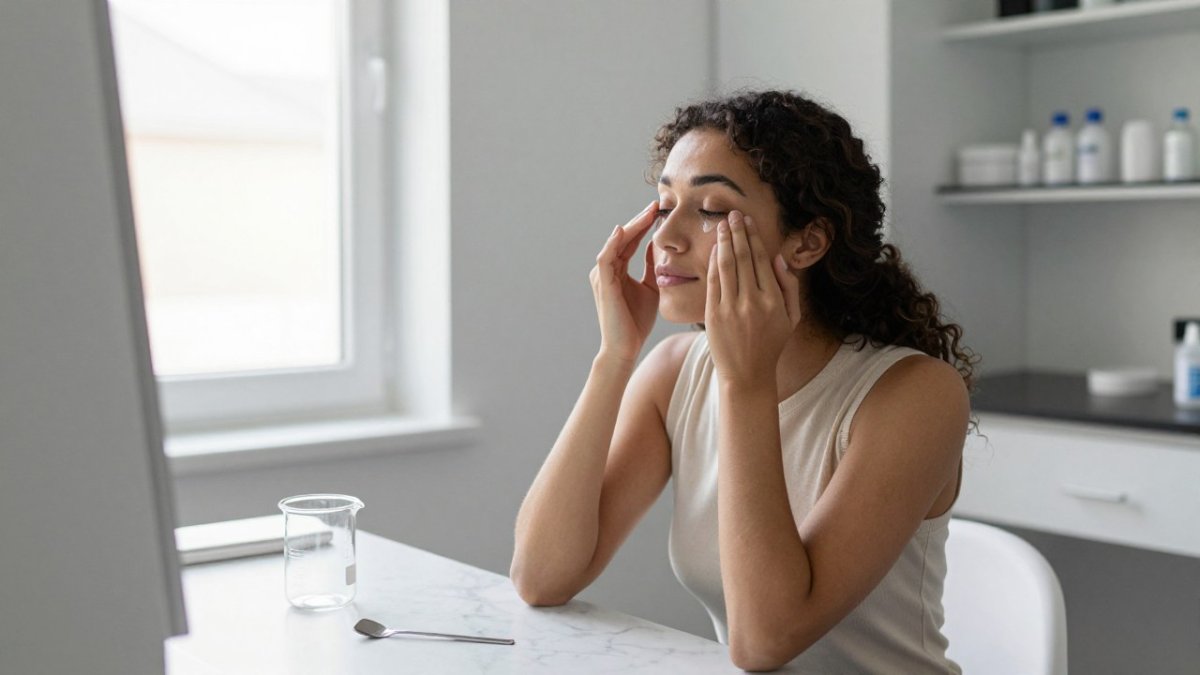
Last Updated: November 24, 2026
Quick Summary
Eye cream results build in two phases: hydration and skin feel can change within 3-7 days, while visible shifts in fine lines or dark circles usually need 8-12 weeks of consistent use. Most people stop before the eight-week mark, right when visible results start to appear.
- Apply eye cream morning and evening using a small grain-sized amount per eye, tapped gently.
- Puffiness may soften in 1-2 weeks, with fuller change taking 4-8 weeks.
- Fine lines typically need 8-12 weeks, and firmness 12 weeks and beyond.
- Track progress with baseline photos at weeks 1, 4, 8 and 12 rather than daily mirror checks.
- Stinging, burning or redness that persists is irritation, not adjustment, so pause use.
Table of Contents
- How long does eye cream take to work?
- The eye cream results timeline, concern by concern
- How often should you apply eye cream?
- Why is my eye cream not working?
- How to apply eye cream correctly
- How to tell whether your eye cream is working
- Where Beverly Hills fits into your eye-care routine
- Choosing your first eye cream with realistic expectations
- Frequently Asked Questions
How long does eye cream take to work?
Most eye creams start to show something within days, but real change takes weeks.
That is the short answer. Here is the part most guides skip.
Eye cream is a targeted topical product made for the thin skin around the eyes. It usually carries lighter textures and specific actives compared with a face moisturiser.
Timelines vary. Individual variation is real. Skin type, sensitivity and product performance all play a part. Still, some patterns hold true.
Below, we break down what to expect week by week, why some products stall, and how to track progress without guessing.
The eye cream results timeline, concern by concern
The eye cream results timeline splits into two phases. Short-term changes show up fast and are mostly about hydration and skin feel. Longer-term visible results take patience and depend on which actives are in the formula.
The table below gives a realistic picture. It reflects general patterns, not a promise for every product.
| Concern | First signs | Fuller visible change | What is happening |
|---|---|---|---|
| Dryness and skin feel | 3-7 days | 2-4 weeks | Hydration and barrier support |
| Puffiness | 1-2 weeks | 4-8 weeks | Fluid movement, skin feel |
| Fine lines | 3-4 weeks | 8-12 weeks | Hydration, smoother texture |
| Dark circles | 4-6 weeks | 8-12 weeks | Tone and brightness support |
| Firmness | 6-8 weeks | 12 weeks and beyond | Collagen support over time |
Read that table as a guide, not a guarantee. Hydration and skin texture often improve first because moisturisers and humectants act on the skin surface. Changes to fine lines, wrinkles and pigmentation take longer because they depend on active ingredients working over many weeks.
Immediate effects versus gradual change
It helps to separate two kinds of result. Immediate effects are what you notice in the first days: skin feels softer, looks less tight, and makeup sits more smoothly. These come from humectants such as glycerin and hyaluronic acid, emollients, and occlusives that support the skin barrier.
Gradual change is what builds over weeks: the appearance of fine lines looking softer, tone looking more even, and the area looking firmer. This depends on actives that influence the skin over time, and it only accumulates with consistent use.
Ingredient-specific onset times
The active in your cream shapes the timeline more than the packaging does. The table below maps common ingredient categories to the concerns they are typically included for and a realistic onset window.
| Ingredient category | Typically included for | Realistic onset window |
|---|---|---|
| Humectants (glycerin, hyaluronic acid) | Hydration, plumped-looking skin | Hours to 1 week |
| Emollients and occlusives | Barrier support, comfort, smoother feel | Days to 2 weeks |
| Caffeine | Appearance of puffiness | 1-4 weeks with consistent use |
| Niacinamide | Tone, barrier support, look of texture | 4-8 weeks |
| Peptides | Look of firmness and smoother fine lines | 8-12 weeks |
| Vitamin C (L-ascorbic acid) | Brightness, uneven tone, antioxidant support | 8-12 weeks |
| Retinoids (where formulated for the eye area) | Appearance of fine lines and texture | 12 weeks and beyond |
A caution: ingredient evidence is not the same as finished-product evidence, because concentration, stability, delivery system, pH and vehicle all matter.
Puffiness and under-eye bags can soften as skin feels calmer and better hydrated. Dark circles can come from shadowing, tone, or genetics. A cream can support brightness, but it cannot change your underlying structure.
If dark circles are your main concern, our guide on how to reduce dark circles explains the causes and the fastest realistic options. If puffiness is the issue, this piece on reducing under-eye puffiness naturally covers practical steps you can pair with your cream.
How often should you apply eye cream?
Applying eye cream regularly, morning and evening, is the usual approach for consistent use.
Here is the practical routine:
- Morning: apply after cleansing, before moisturiser and sunscreen.
- Evening: apply after cleansing, as part of your evening routine.
- Amount: a small grain-sized amount per eye is plenty.
- Method: tap gently, never rub or drag.
Consistency matters more than quantity. Twice-daily use with a light hand beats a heavy layer once in a while. Skipping days slows the timeline because the skin loses the steady supply of hydration and actives it needs.
If your skin is sensitive, start once a day and build up. Watch how it feels. Most people can move to twice daily within a week or two.
Why is my eye cream not working?
An eye cream that seems to do nothing is usually a timing or expectation problem, not a broken product. Most people quit before the eight-week mark, right when visible results start to appear.
Common reasons a product stalls:
- You stopped too early. Fine lines and tone need weeks, not days.
- You applied it too little or too irregularly. Consistency drives product efficacy.
- The formula does not match your concern. A hydrating cream will not address tone the same way a brightening active might.
- You expected too much. A cream supports the appearance of the eye area. It does not remove structural shadows or reverse ageing.
- Your skin barrier is stressed. Irritation and sensitivity can mask progress.
This is where evidence quality matters. If you want to understand how an active like vitamin C supports under-eye brightness, read does vitamin C brighten under-eye skin.
Watch out: if your eye area stings, burns or turns red, that is not "adjustment". Stop and reassess. Irritation is different from a product simply taking time.
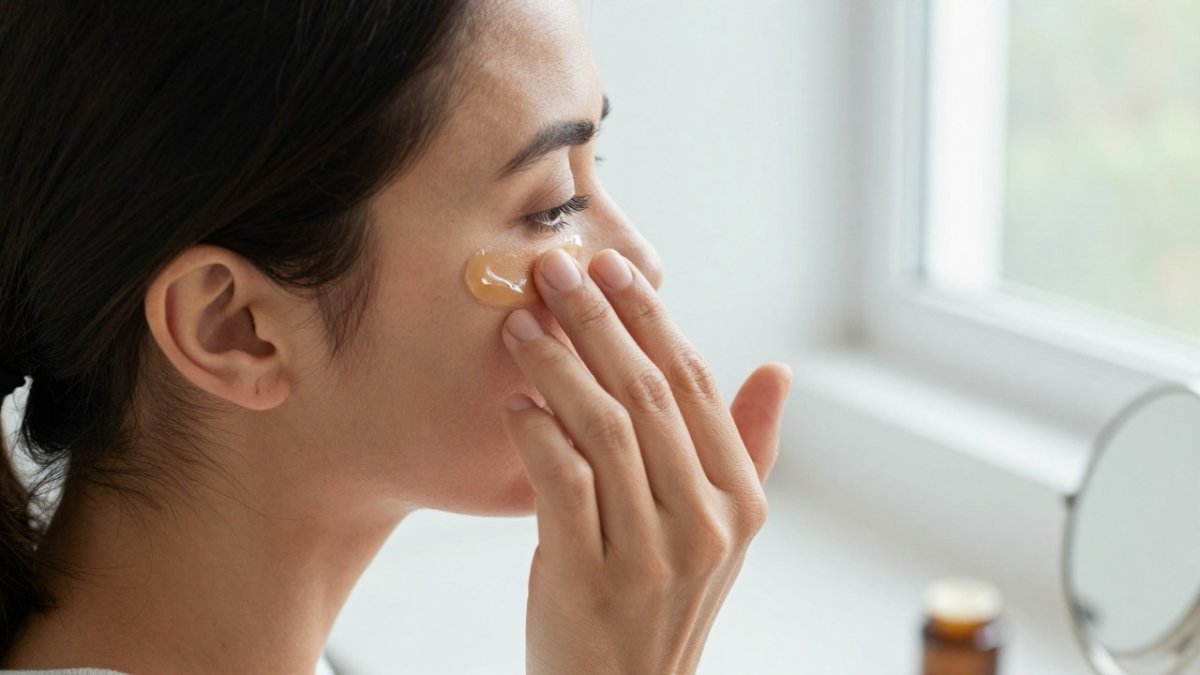
How to apply eye cream correctly
Correct application is simple, but small habits change the outcome. The goal is to get product onto the skin without pulling the delicate under-eye area.
- Cleanse and pat the skin dry.
- Dot a small amount along the orbital bone, under each eye.
- Tap gently with your ring finger until absorbed.
- Follow with moisturiser, then sunscreen in the morning.
A few things to avoid:
- Do not drag or stretch the skin.
- Do not apply right against the lash line.
- Do not layer strong actives directly on the eye area unless the product is made for it.
For product-specific guidance, see our application guide.
How to tell whether your eye cream is working
You will know an eye cream is working when the skin feels and looks better in small, steady ways. Skin feel and texture usually shift first, before visible results. The problem is that memory is unreliable, so the fairest test is a method you can repeat.
A repeatable progress-tracking method
Keep it boring and consistent. The goal is a real comparison, not a flattering one.
- Take a baseline photo before you start. Same room, same window or lamp, same time of day, neutral expression, no makeup. Use the rear camera if you can and stand the same distance from the mirror.
- Note your starting point in words. Write down what you see and feel: dryness, tightness, how defined the fine lines look, how the area feels on waking.
- Check in at set points, not daily. Weeks 1, 4, 8 and 12 are enough. Daily mirror-checking magnifies normal day-to-day variation.
- Photograph at each check-in using the same setup as your baseline.
- Compare side by side, not from memory. Put the baseline and current photo next to each other and look for direction of change, not perfection.
At each check-in, ask three questions: does the skin feel more comfortable, do the fine lines look any softer, and does the tone look any more even? A "yes" on feel with a "not yet" on tone is a normal pattern at week four.
Signs it is working
- Skin feels softer and more hydrated.
- Fine lines look slightly less defined.
- The area looks calmer and less tired.
- Makeup and concealer sit more smoothly.
- The improvement holds when you repeat the same photo setup.
Signs it is not working, and what to do
- No change in skin feel after several weeks of consistent use.
- The concern looks unchanged at twelve weeks despite twice-daily use.
- The formula does not match your main concern (a purely hydrating cream will not address tone the way a brightening active might).
If any of these apply, the sensible next step is to reassess rather than add more products: check you are applying consistently, confirm the formula targets your concern, and consider whether a different active is a better match. A twelve-week checkpoint is a fair test for most concerns; firmness and fine lines may need longer before you judge.
Irritation versus normal adjustment
Some tingling on first use can be normal for certain actives, but irritation is different and should not be pushed through. Watch out: stinging, burning, redness, swelling, flaking or itching that persists or worsens is a sign to pause use, not a stage to wait out.
This is where evidence quality matters. A product can only do what its ingredients and formulation support. If you want to understand how an active like vitamin C supports under-eye brightness, read does vitamin C brighten under-eye skin. It separates ingredient evidence from what a finished product can realistically claim.
Where Beverly Hills fits into your eye-care routine
At Beverly Hills, we publish our concentrations because you deserve to know what you are applying.
If you are ready to build a simple, logical routine, you can shop all Beverly Hills products and check the ingredient detail for yourself.
Choosing your first eye cream with realistic expectations
Pick your first eye cream by concern, not by hype. Match the formula to what you actually want to improve, then give it a fair run of weeks before you judge it.
A quick decision framework:
- Mainly dryness or skin feel? Prioritise hydration and barrier support.
- Mainly puffiness? Look for ingredients included for the appearance of puffiness, like caffeine.
- Mainly fine lines? Look for peptides and hydrating actives, and plan for eight to twelve weeks.
- Mainly dark circles? Set realistic expectations and pair tone support with sun protection.
A practical approach is to choose one product and track progress over several weeks before judging it.
Giving one formula enough time to show what it can do is often the real challenge. Beverly Hills publishes its concentrations, so you can see what each product contains and build a routine you understand.
Frequently Asked Questions
How long does it take to see a difference with eye cream?
Hydration and skin-feel changes can appear within days, while changes to fine lines, puffiness and dark circles usually need consistent use over several weeks. The exact timeline depends on the ingredients, the formulation and your own skin. A reasonable approach is to judge hydration and texture at two to four weeks, then reassess firmness and line appearance at eight to twelve weeks before deciding whether a product is worth continuing.
Can eye cream reduce puffiness straight away?
That is a cosmetic, short-term result, not a permanent change. Longer-lasting improvement in the appearance of puffiness depends on consistent use plus factors such as sleep, salt intake and how you apply the product. Judge instant effects separately from the weeks-long results.
Why is my eye cream not working?
Common reasons include applying it too little or too irregularly, expecting wrinkle changes within days, layering incompatible actives that cause irritation, or using a formula whose actives do not match your main concern. It can also simply be too early. Track your use and take a photo in the same light each week for eight weeks. If nothing has changed and application has been consistent, the formula may not suit your concern or skin type.
How can I tell whether my eye cream is working?
Take a baseline photo in consistent lighting, then repeat weekly and compare rather than relying on memory. Note hydration, how smooth the under-eye looks, whether concealer sits better, and whether fine lines look softer. Also record any stinging or redness, since irritation is not the same as adjustment. If you see gradual improvement in the appearance of your main concern over eight to twelve weeks, the product is doing its job.
 Add mybevhills.com as a preferred source on Google →