Skincare Ingredients for Rapid Skin Repair: An Evidence Guide
Beverly Hills ·
Last Updated: October 26, 2026
Quick Summary
Rapid skin repair means supporting a compromised barrier with ceramides, cholesterol, fatty acids, niacinamide, panthenol and hyaluronic acid while pausing exfoliants, retinoids and high-strength actives. Mild compromise typically recovers in one to four weeks, with reduced stinging and tightness usually noticeable within the first week.
- Pause exfoliants, retinoids and high-strength actives first, then reintroduce hydration and barrier lipids.
- Keep recovery to three steps: gentle cleanser, barrier moisturiser and mineral sunscreen.
- Ceramides, cholesterol and fatty acids rebuild the lipid mortar between skin cells.
- Reintroduce one active at a time from around week four, starting with a hydrating serum.
- Skin still stinging after four weeks of strict barrier care warrants seeing a clinician.
Table of Contents
- What Rapid Skin Repair Actually Means
- How to Repair a Damaged Skin Barrier
- Skin Barrier Repair Ingredients That Do the Work
- How Long Does Skin Barrier Repair Take?
- Ingredients That Support Collagen and Skin Texture
- Layering Actives for Repair Without Irritation
- Ingredients to Pause While Skin Recovers
- Building a Repair-Focused Routine with Beverly Hills
- Frequently Asked Questions
What Rapid Skin Repair Actually Means
That distinction matters because most "fast repair" marketing describes a temporary visual effect. A film-forming ingredient can tighten the surface of the skin within minutes, but that is a mechanical illusion, not repair.
So what does the evidence actually support? A small group of ingredients has genuine research behind barrier function and epidermal repair: ceramides, niacinamide, panthenol, hyaluronic acid, and cholesterol-dominant lipid mixtures.
How to Repair a Damaged Skin Barrier
Repairing a damaged skin barrier means reducing insult first, then rebuilding the lipid barrier with ceramides, cholesterol and fatty acids while keeping water in. The single most effective step is subtraction: pause exfoliants, retinoids and high-strength actives, then reintroduce hydration and barrier lipids.
Signs Your Barrier Is Compromised
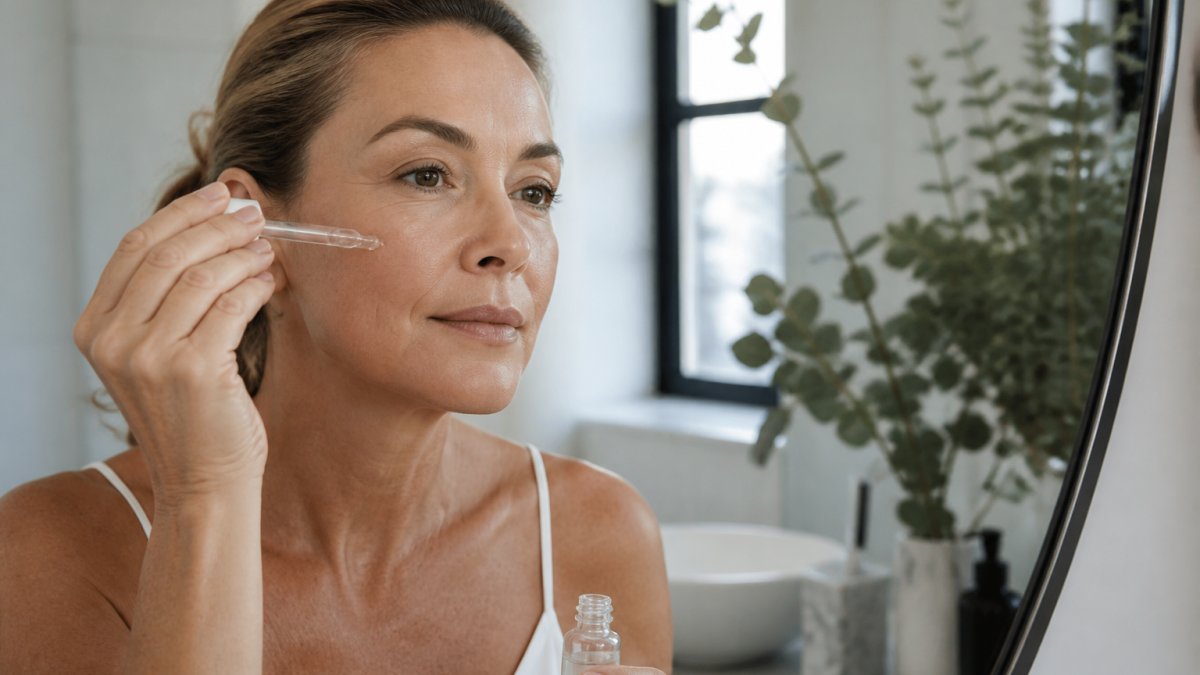
Stinging on products that never used to sting is the clearest early signal. Other common markers include tightness after cleansing, flaking in areas that were previously oily, redness that lingers longer than usual, and skin that feels rough despite regular moisturising.
Watch out: treating these symptoms with more exfoliation is the most common mistake we see. If skin stings, it needs fewer actives, not a stronger resurfacing step.
A Simple Recovery Routine
Keep it to three steps for one to two weeks:
- Cleanse with a non-foaming, fragrance-free cleanser, once in the evening.
- Apply a barrier moisturiser containing ceramides or niacinamide to damp skin.
- Use a mineral sunscreen in the morning and nothing else.
That is the whole protocol. No toners, no essences, no masks.
Skin Barrier Repair Ingredients That Do the Work
The core barrier repair ingredients are ceramides, cholesterol, free fatty acids, niacinamide, panthenol, glycerin and hyaluronic acid.
Skincare Ingredients That Actually Work For Mature Skin
Hey Spring Chicken
Ceramides are the most studied of the group. Research indexed on PubMed, the US National Library of Medicine database consistently links ceramide deficiency to impaired barrier function and increased water loss.
Where formulation matters is concentration and ratio. This is exactly why we publish our own actives and their concentrations rather than hiding behind a proprietary blend name: you can see what each active does and at what percentage.
How Long Does Skin Barrier Repair Take?
Skin barrier repair typically takes between one and four weeks for mild compromise, and longer for severely irritated skin or skin recovering from an in-clinic procedure. Most people notice reduced stinging and tightness within the first week, with visible improvement in texture and redness over the following two to three. But it is worth understanding why that timeline exists, because it explains what "rapid" can honestly mean.
What Sets the Speed Limit
Three biological processes govern recovery, and none of them can be meaningfully accelerated beyond their own pace:
- Corneocyte turnover. The outermost skin cells are replaced on a cycle measured in weeks, not days. New barrier cells have to mature and migrate before surface texture changes.
- Lipid synthesis and assembly. Ceramides, cholesterol and free fatty acids are produced and organised into the lamellar structure between cells. This is a rebuilding process, not a coating process.
- Transepidermal water loss (TEWL) normalisation. As the lipid barrier is restored, water loss falls and skin stops feeling tight. TEWL is one of the more objective markers researchers use to track barrier recovery.
This is why a film-forming product can make skin look tighter within minutes while the barrier itself is unchanged. Temporary visible tightening is a surface effect; barrier recovery is a structural one. Both can be useful, but they are not the same thing, and a "rapid repair" claim that conflates them is describing the first while implying the second.
A Realistic Recovery Timeline
| Recovery stage | Typical timeframe | What is happening biologically | What you may notice |
|---|---|---|---|
| Calming | Days 1-7 | Inflammatory signalling settles; water loss begins to fall | Less stinging, reduced tightness |
| Rebuilding | Weeks 1-2 | Lipid synthesis and lamellar assembly resume | Flaking settles, skin feels less rough |
| Consolidating | Weeks 2-4 | Corneocyte turnover completes a cycle; barrier function stabilises | Redness fades, texture looks smoother |
| Reintroducing actives | Week 4 onward | Barrier tolerance returns | One active at a time, one to two times weekly |
What Actually Speeds It Up
The variable that matters most is how much you remove from your routine. Someone who pauses actives entirely usually recovers faster than someone who reduces them by half, because the cumulative irritant load is what keeps the barrier in a compromised state.
What does not speed it up: more exfoliation, stronger actives, or adding several new products at once. Each of these adds insult while the barrier is still rebuilding.
Watch Out If skin is still stinging after four weeks of strict barrier care, gentle cleansing, barrier moisturiser, mineral sunscreen, no actives, that is a signal to see a clinician rather than to keep adjusting products. Persistent stinging can have causes that skincare cannot address.Post-Procedure Recovery Is a Different Timeline
Skin recovering from a chemical peel, laser or microneedling session follows the same biology but from a lower starting point, and the acute phase is usually longer. The principles are identical, subtraction first, barrier lipids second, actives last, but the reintroduction window typically stretches beyond the four-week mark. If you are planning actives after an in-clinic procedure, follow the guidance your practitioner gives you rather than a general article, and treat any resurfacing ingredient as the final step, not the first.
Ingredients That Support Collagen and Skin Texture
Collagen-supporting ingredients work on a slower clock than barrier repair, and it is worth being honest about that.
Vitamin C contributes to collagen synthesis as a cofactor and provides antioxidant protection against free radical neutralisation from UV exposure.
Peptides are a broad category and should not be treated as interchangeable.
For repair-focused care that combines EGF, Argireline, vitamin C and hydrators in one step, our Ultimate Cell Repair & Collagen Booster Cream is designed for that role.
Layering Actives for Repair Without Irritation
Layering for repair follows one rule: thinnest to thickest, actives before oils, and one new active at a time. Ingredient synergy is where most routines fail, because people reintroduce four products in the same week and cannot tell which one caused the reaction. But the more useful question during recovery is not just what order to apply things, it is which ingredients should not be in the same routine at all while the barrier is rebuilding.
Ingredient Conflicts to Respect During Recovery
Some combinations are fine on healthy skin and counterproductive on a compromised barrier. The conflicts below are the ones most likely to stall recovery:
| Combination | Why it is a problem during recovery | What to do instead |
|---|---|---|
| Retinoid + AHA/BHA | Both increase turnover and irritant load; together they overwhelm a barrier that is still rebuilding | Keep both out until week 4, then reintroduce one at a time |
| Vitamin C (L-ascorbic acid) + strong acids | Low-pH formats stacked together increase sting and irritation risk | Use vitamin C on alternate mornings once reintroduced; do not layer with an acid on the same day |
| Benzoyl peroxide + retinoid | Both are drying and irritating; the combination is hard to tolerate on compromised skin | Pause both during the acute phase |
| Multiple exfoliating acids in one routine | Cumulative acid load irritates even when each product is used at "gentle" frequency | Choose one acid format, at low frequency, only after recovery |
| Physical scrub + any active | Mechanical exfoliation on a fragile barrier causes micro-trauma | Avoid scrubs entirely until skin is calm |
A Workable Reintroduction Sequence
Once the acute phase has settled, typically around week 4, reintroduce in this order, pausing if skin reacts:
- Week 4: add a hydrating serum in the morning only.
- Week 5: add vitamin C on alternate mornings.
- Week 6: add a low-strength retinoid twice weekly at night.
This sequence front-loads hydration and antioxidant support before turnover actives, which is the reverse of how many routines are built. It is deliberately conservative because the cost of reintroducing too fast is another two to four weeks of recovery.
Delivery Systems and Tolerability
Delivery systems matter here too. Encapsulated retinoids and stabilised vitamin C formats tend to be better tolerated during reintroduction than their unstabilised equivalents, though tolerability is individual.
Our routine guide sets out morning and evening sequences built around the thinnest-to-thickest principle, and our actives guide explains what each active does and at what percentage so you can see what you are layering before you layer it.
Ingredients to Pause While Skin Recovers
Pause alpha-hydroxy acids, beta-hydroxy acids, retinoids, benzoyl peroxide, physical scrubs and high-concentration vitamin C during the acute phase. These are all useful ingredients in a stable routine and all counterproductive on a compromised barrier.
Watch out: "gentle" exfoliating toners used daily are a frequent culprit. Mild acids used repeatedly still accumulate, and skin that is stinging is telling you the cumulative load is too high.
Building a Repair-Focused Routine with Beverly Hills
A repair-focused routine is deliberately short: cleanse, treat, protect. Our formulas are built to work in a logical three-layer sequence rather than an open-ended product list, and every concentration is published and batch-verified so you know what you are layering.
Start with the barrier, then add actives. If you are introducing a Beverly Hills serum for the first time, read the application guide before first use, because how you apply it affects tolerability as much as what is in it.
Frequently Asked Questions
How can you support the repair of a damaged skin barrier?
Strip the routine back to gentle cleansing, a moisturiser with ceramides or fatty acids, and daily sunscreen. Pause exfoliating acids and retinoids until stinging and redness settle. Look for skin barrier repair ingredients such as ceramides, glycerin, niacinamide and panthenol, which support moisture retention and lipid barrier function. Avoid hot water, harsh scrubs and over-cleansing. If irritation persists beyond a few weeks, or involves swelling, weeping or pain, see a doctor or pharmacist rather than adding more products.
How long does skin barrier repair take?
It varies with the cause and severity. Mild irritation from a new active often settles within a few days to two weeks once the trigger is removed. More significant disruption from over-exfoliation or a reaction can take several weeks. Epidermal repair is a continuous process, and visible improvement usually comes before the barrier is fully comfortable again. Judge progress by how skin feels, not just how it looks, and reintroduce actives one at a time rather than all at once.
Can hyaluronic acid help repair the skin barrier?
Hyaluronic acid is a humectant: it draws and holds water in the upper skin layers, which supports skin hydration and a plumper appearance. That helps skin look and feel more comfortable during recovery, but it does not replace the lipids that form the barrier itself. Pair it with occlusive or lipid-rich ingredients such as ceramides and fatty acids to support moisture retention. Beverly Hills formulations publish their active concentrations, so you can see exactly what you are layering.
Is niacinamide good for a weakened skin barrier?
Niacinamide is well studied for supporting barrier function and reducing the look of redness and uneven tone. It also has anti-inflammatory properties in the cosmetic sense, which makes it a reasonable choice when skin is reactive. Tolerance varies, so introduce it gradually and watch for stinging. It layers well with hyaluronic acid and sunscreen, but keep the rest of the routine simple while skin settles rather than stacking several new actives at once.
What should you avoid when your skin barrier is irritated?
Pause high-strength exfoliating acids, retinoids, scrubs, alcohol-heavy toners and anything that stings on application. Skip hot showers, rough washcloths and over-cleansing, which increase transepidermal water loss. Do not add three new products hoping one will fix it; that makes it harder to identify the trigger. Keep sunscreen daily, since UV exposure slows recovery and drives photoaging. Reintroduce one active at a time, at low frequency, once skin has been comfortable for a week or two.
How do you build a simple skincare routine for skin recovery?
Three steps cover most of it: a gentle cleanser, a barrier-supporting serum or moisturiser, and broad-spectrum sunscreen in the morning. In the evening, cleanse and apply your repair-focused product. Add one targeted active only once skin is calm. Beverly Hills designs its formulas to work in a logical three-layer routine, which suits recovery because it limits the number of products competing for the same step and makes it easier to spot what is helping.
Most people treating a damaged barrier are doing too much, not too little. If you want a routine where every active and its concentration is stated plainly, start with the barrier and build from there. Get started with Beverly Hills and follow a routine you can actually verify.
Shop all Add mybevhills.com as a preferred source on Google →