Top Rated Anti Aging Serums 2026: A Clinical Guide
Editorial Team ·
Table of Contents
- Top Rated Anti Aging Serums 2026: What the Clinical Data Actually Shows
- Best Anti-Aging Ingredients for 2026
- Retinol vs Peptides for Mature Skin
- How to Build an Anti-Aging Skincare Routine
- Clinical Trial Data Interpretation: What the Numbers Really Mean
- Ingredient Interactions and Contraindications
- Conclusion: Choosing Your 2026 Serum
- Frequently Asked Questions
Last Updated: September 28, 2026
Top Rated Anti Aging Serums 2026: What the Clinical Data Actually Shows
The market for top rated anti aging serums 2026 is crowded with bold claims, yet few brands publish the actual concentration of their active ingredients. This guide from Beverly Hills cuts through the marketing to show you what clinical data, batch verification, and honest percentages really look like. Below, we'll break down how to read a certificate of analysis, which ingredients matter at what strength, and how to build a routine that works.
Reading a Certificate of Analysis (CoA)
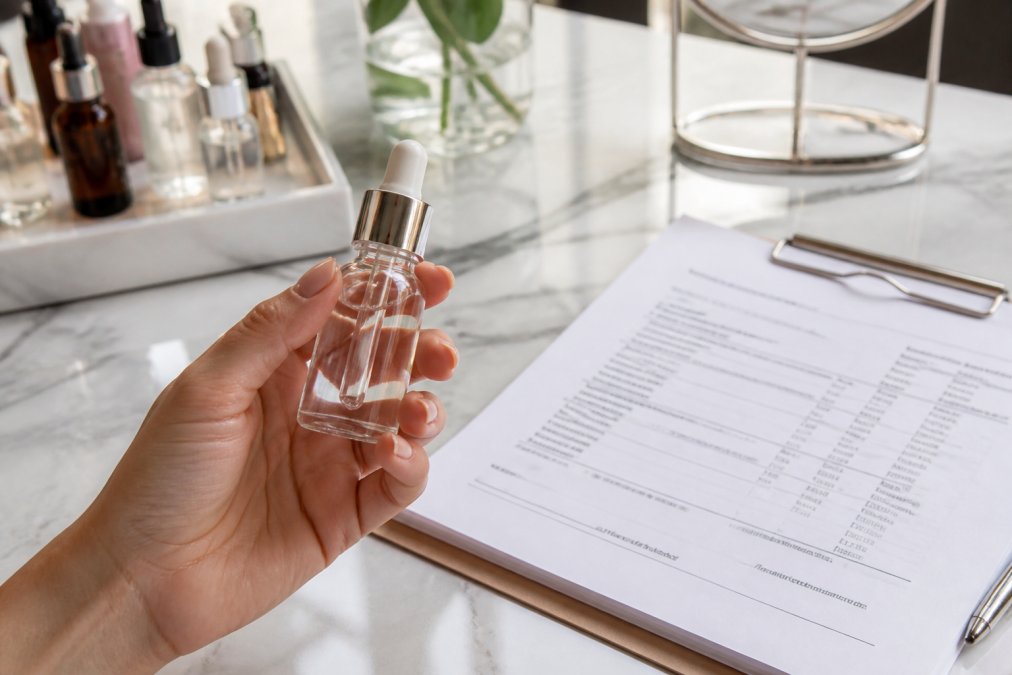
A Certificate of Analysis (CoA) is a document from an independent lab confirming a batch's actual ingredient concentrations. It is the single most useful document a skincare buyer can request. Most brands hide behind proprietary blends, which legally allow them to list ingredients without percentages. A CoA removes that ambiguity.
Why Batch Verification Beats Proprietary Blends
Proprietary blends exist to protect trade secrets, but they also conceal trace doses. A formula can list retinol in a blend that contains less than 0.01% of it. Batch verification solves this by testing every production run, not just a one-time sample.
Best Anti-Aging Ingredients for 2026
The best anti-aging ingredients for 2026 remain retinoids, vitamin C, peptides, hyaluronic acid, and ceramides. Each targets a different layer of the skin, which is why combining them correctly matters more than chasing a single hero ingredient.
Here is how the main actives compare:
Ingredient | Primary Function | Typical Effective Range | Best For |
|---|---|---|---|
Retinoids | Cellular turnover | 0.01%-1% | Fine lines, texture |
Vitamin C | Antioxidant, brightening | 10%-20% | Photoaging, dullness |
Peptides | Collagen production | 2%-5% | Firmness, elasticity |
Hyaluronic acid | Hydration barrier | 0.1%-2% | Dryness, plumping |
Ceramides | Lipid barrier repair | 0.5%-2% | Sensitivity, TEWL |
Concentration Thresholds That Matter
Below a certain percentage, an active ingredient does nothing measurable. Vitamin C under 8% shows weak antioxidant activity. Retinol under 0.01% is essentially a marketing token. Peptides need roughly 2% or more to support collagen production.
Retinol vs Peptides for Mature Skin
Retinol and peptides are not competitors; they solve different problems. Retinol accelerates cellular turnover and resurfaces texture. Peptides signal the skin to build more collagen and improve elasticity. For mature skin, the strongest approach is often both, used in a planned sequence.
Layering Retinol and Peptides Safely
The safe sequence is: cleanse, apply peptides first, let them absorb, then apply a low-strength retinol. Alternate nights if your skin is sensitive. Never layer a strong acid, retinol, and vitamin C in the same session; that combination overwhelms the lipid barrier and causes irritation.
Watch OutApplying retinol and a strong exfoliating acid in the same routine strips the lipid barrier. The result is redness, flaking, and trans-epidermal water loss that can take weeks to recover from.How to Build an Anti-Aging Skincare Routine
Building an anti-aging skincare routine comes down to three layers applied in the right order, morning and evening. Complexity is not the goal; consistency is. But the exact products and timing should shift based on your skin type and concerns.
- Cleanse with a gentle, non-comedogenic cleanser. Oily skin may prefer a gel or foaming cleanser; dry skin benefits from a cream or milk cleanser.
- Treat with your active serum (antioxidant in the morning, retinoid or peptide at night).
- Protect with a moisturizer and, in the morning, broad-spectrum SPF.
Tailoring Your Routine by Skin Type
- Oily or acne-prone: Choose lightweight, water-based serums with niacinamide or salicylic acid. Avoid heavy oils and thick creams that can clog pores. A gel moisturizer and mineral SPF are ideal.
- Dry or dehydrated: Layer hydrating serums with hyaluronic acid and ceramides. Use a cream moisturizer and consider a facial oil at night to seal in moisture.
- Sensitive or reactive: Introduce actives one at a time, starting with the lowest effective concentration. Peptides and ceramides are gentler than retinoids. Patch-test new products on your inner forearm for 48 hours.
- Combination: Use a lightweight serum all over and a richer moisturizer only on dry areas. You can also apply a clay mask to oily zones once a week.
Morning vs. Evening: What to Use When
- Morning: Vitamin C serum (antioxidant protection), hyaluronic acid (hydration), and SPF 30 or higher. If you use niacinamide, it layers well under sunscreen.
- Evening: Retinol or retinoid (start 2-3 nights per week), peptides (on alternate nights if using retinol), and a barrier-repair moisturizer. Avoid strong acids on the same night as retinol.
When to Start and How to Adjust
Most dermatologists suggest starting anti-aging serums in your mid-20s to early 30s, but the right time depends on your skin and goals. If you have sun damage or fine lines, you can start earlier with gentle antioxidants. If you are pregnant or breastfeeding, avoid retinoids and consult your doctor about alternatives like peptides and vitamin C.
Clinical Trial Data Interpretation: What the Numbers Really Mean
Clinical trial data tells you how a serum performed under controlled conditions, not how it will perform on your skin. Understanding the difference protects you from inflated claims. Most competitor articles rely on anecdotal evidence; here is how to interpret the numbers like a researcher.
Key Elements of a Credible Study
- Sample size: A study of 30 people over 8 weeks is weaker evidence than one of 200 people over 24 weeks. Look for at least 50 participants for meaningful results.
- Duration: Anti-aging effects like reduced wrinkles or improved firmness typically require 12-24 weeks of consistent use to appear. Studies shorter than 8 weeks may only show hydration or temporary tightening.
- Blinding: Double-blind, placebo-controlled studies are the gold standard. If participants and researchers don't know who got the active formula, results are less likely to be biased.
- Funding source: Brand-funded studies tend to report favorable results. Independent or peer-reviewed studies carry more weight.
- Measurement methods: Objective measures like corneometry (hydration), cutometry (elasticity), and image analysis (wrinkle depth) are more reliable than self-reported satisfaction.
Red Flags in Marketing Claims
- "Clinically proven" without a citation or sample size.
- "Results in 7 days" for wrinkle reduction, this is usually due to temporary hydration or film-forming ingredients, not structural change.
- Before-and-after photos with different lighting, angles, or makeup.
- Proprietary blends that hide ingredient concentrations.
Long-Term vs. Short-Term Expectations
Short-term results, like the visible tightening Beverly Hills formulas deliver in 90 seconds, come from film-forming and hydrating ingredients. Long-term results, like reduced fine lines and improved firmness, come from consistent use of retinoids and peptides over months. Confusing the two is the most common source of disappointment.
Key TakeawayInstant tightening proves a formula is working on the surface. Lasting change in wrinkles and elasticity only appears after consistent use over several months.How to Apply This to Your Purchase
When evaluating a serum, ask the brand for its clinical data or a certificate of analysis. If they can't provide it, treat their claims as marketing. For context on how cosmetic claims are regulated, see FTC guidance on advertising claims. By understanding the science, you can choose products with real evidence behind them, not just hype.
Ingredient Interactions and Contraindications
Some actives should never be combined. Retinoids and strong acids conflict. Vitamin C and benzoyl peroxide can cancel each other out. Certain peptides degrade in low-pH formulas, so mixing them with acids reduces their effect.
Combination | Interaction | What To Do |
|---|---|---|
Retinol + AHA/BHA | Increased irritation | Alternate nights |
Vitamin C + Benzoyl peroxide | Oxidation, reduced effect | Use at different times |
Peptides + strong acids | Peptide breakdown | Separate routines |
Niacinamide + Vitamin C | Possible flushing | Introduce slowly |
Conclusion: Choosing Your 2026 Serum
The hardest part of buying an anti-aging serum is trusting the label. Most brands publish percentages they never verify, and proprietary blends let them hide trace doses behind impressive-sounding names. Beverly Hills takes the opposite approach: every concentration is published and batch-verified, formulas are built for a logical three-layer routine, and the results range from visible tightening in 90 seconds to progressive treatment of dark circles, puffiness, and firmness.
Frequently Asked Questions
What ingredients should I look for in an anti-aging serum in 2026?
Look for published concentrations of retinoids, vitamin C, peptides, and hyaluronic acid. A 2026 top rated anti aging serum will list exact percentages on the label rather than hiding behind proprietary blends. Prioritize formulas with batch-verified certificates of analysis so you know the active ingredients are present at the stated dose. Antioxidants like vitamin C and firming agents such as peptides should appear early in the ingredient list to support collagen production and skin elasticity.
How do I incorporate a high-performance serum into my daily skincare routine?
Apply your serum to clean, dry skin after toner and before moisturiser. For morning routines, a vitamin C or antioxidant serum protects against photoaging. In the evening, a retinoid or peptide serum supports cellular turnover while you sleep. Use a lightweight, non-comedogenic moisturiser afterward to seal in hydration and support the lipid barrier. One or two targeted serums are enough for visible results; more layers can irritate the skin and reduce serum absorption.
Are batch-verified skincare products more effective for aging skin?
Batch verification confirms that the active ingredients meet their stated concentration in each production run. Without it, a serum may contain only trace amounts of the actives listed on the label. For aging skin concerns like fine lines, wrinkles, and loss of firmness, consistent dosing matters. A batch-verified product gives you a reliable amount of retinoids, peptides, or vitamin C with every bottle, which supports predictable results over time.
How long does it take to see results from anti-aging serums?
Hydration and temporary tightening can appear within minutes to hours. Fine lines and skin texture improvements typically take four to eight weeks of consistent use. Deeper changes in skin elasticity and collagen production may take three to six months. Retinoids and peptides work gradually by supporting cellular turnover and the dermal layer, so daily application is essential. Photographic documentation under consistent lighting helps track real progress beyond subjective impressions.
Shop all