Simplified Skincare Routine for Busy Professionals
Beverly Hills ·

Last Updated: November 14, 2026
Quick Summary
A simplified skincare routine for busy professionals uses four core steps: cleanse, treat with one serum, moisturise and protect with sunscreen every morning. Keeping the routine short makes it easier to repeat, and consistency matters more than the number of products.
- Cleanse gently to remove oil, dirt and makeup without stripping the skin barrier.
- Choose one treatment serum that matches one concern rather than several actives.
- Apply broad-spectrum sunscreen with at least SPF 30 as the final morning step.
- Morning routines take about 2 minutes and evening routines about 5 minutes.
- Start with a cleanser, moisturiser and sunscreen, then add one treatment after two weeks.
Table of Contents
- What a Simplified Skincare Routine Needs to Do
- The Core Steps: Cleanse, Treat, Moisturise, Protect
- Building a Simple Skincare Routine Day and Night
- Starting Out: A Daily Skincare Routine for Beginners
- How to Build My Skincare Routine With My Products
- Time-Saving Habits and Routines for Office and Travel
- Keeping a Daily Skincare Routine for Glowing Skin Consistent
- Choosing Your Next Step: Starting Your Routine This Week
- Frequently Asked Questions
What a Simplified Skincare Routine Needs to Do
A simplified skincare routine for busy professionals should do three things well: clean the skin, support it with a few well-chosen treatments, and protect it from daylight. It should take less time than a long shelf of products, and it should be easy enough to keep up on a hectic week.
Many readers own five or six products, use them unevenly, and feel they are missing something. A simplified skincare routine works better because it is easier to repeat. Consistency usually matters more than the number of steps.
A good routine should answer four questions:
- What does the skin need every day?
- What can wait until the weekend?
- Which products are doing real work?
Start with the basics. For broader guidance on active ingredients, mature-skin routines and how to use these products, see our skincare guidance and blog hub. Cleansing removes oil, dirt and makeup.
Keep expectations realistic. Skincare changes how skin looks and feels over time. It does not reverse ageing or cure skin conditions. Our aim here is a routine that is practical, repeatable and built around evidence.
The Core Steps: Cleanse, Treat, Moisturise, Protect
Most effective routines have four core steps. Each one has a clear job, and understanding that job makes it easier to choose products quickly rather than collecting them.
**1.
2. Treat. A treatment serum delivers a higher concentration of a specific active than a moisturiser typically carries.
**3.
4. Protect. Broad-spectrum sunscreen with at least SPF 30 is the most evidence-supported step for how skin looks over time (the WHO).
For a simplified routine, steps can sometimes be combined. Many moisturisers contain light hydrating ingredients, and some daytime moisturisers include SPF.
| Step | Essential or optional | Morning | Evening | Typical time |
|---|---|---|---|---|
| Cleanse | Essential | Light cleanse or rinse | Full cleanse | 30-60 seconds |
| Treat | Optional (choose one) | Antioxidant serum | Hydrating or targeted serum | 15-30 seconds |
| Moisturise | Essential | Yes | Yes | 15-30 seconds |
| Protect (SPF) | Essential | Yes | No | 30-60 seconds |
Typical time
Cleanse 30-60 secondsTreat 15-30 secondsMoisturise 15-30 secondsProtect (SPF) 30-60 secondsIf you want to see how these four steps map onto a full routine, the routine guide walks through the order and where targeted actives fit. For a closer look at how specific ingredients behave, the actives guide explains what each one does and where its limits are.
Building a Simple Skincare Routine Day and Night
The morning and evening routines do different jobs, so it helps to keep them separate.
Morning routine (about 2 minutes):
- Rinse or lightly cleanse
- Apply an antioxidant serum if you use one
- Apply eye product if needed
Evening routine (about 5 minutes):
- Remove makeup and sunscreen
- Cleanse thoroughly
- Apply your treatment serum
Most people find the evening routine takes longer because it includes makeup removal. Keep it manageable by placing products where you will see them, such as next to the sink.
A common mistake is using too many actives at once. Layering several strong treatments in one night can irritate the skin.
Starting Out: A Daily Skincare Routine for Beginners
If you are new to skincare, begin with three products: a gentle cleanser, a moisturiser and a sunscreen. This simple set covers the essentials and keeps the routine easy to stick with.
Once that feels natural, add one treatment, such as a hydrating serum. Use it for a few weeks before deciding whether to keep it.
Here is a beginner plan:
- Week 1 to 2: Cleanser, moisturiser, sunscreen
- Week 3 onwards: Add one treatment serum in the evening
- Later: Consider an eye product or a morning antioxidant if you want more targeted support
Patch test new products on a small area of skin first, especially if your skin is sensitive. Stop using a product if you notice redness, stinging or irritation.
How to Build My Skincare Routine With My Products
If you already own several products, you do not need to buy anything new to simplify your routine. You can browse the complete Beverly Hills range to see every formula available if you want to fill a gap.
- List your products. Write down every cleanser, serum, moisturiser and sunscreen you use.
- Identify the gaps. Do you have a sunscreen? Do you have a moisturiser that suits your skin?
- Remove duplicates. If you own three similar moisturisers, keep the one you like best.
- Assign each product a role. Decide which step it belongs to and whether it belongs in the morning, evening or both.
- Test for two weeks. Use the simplified routine consistently before judging results.
Within the Beverly Hills range, you can explore the full collection to see which formulas fit your routine. Check the full product details and current application guidance before adding anything new.
Avoid layering products without understanding them. Pay attention to how each one feels and whether your skin reacts.
Time-Saving Habits and Routines for Office and Travel
Most simplified-routine guides stop at 'keep it short'. The harder question for a busy professional is how a routine survives an air-conditioned office, a long commute, a flight and a full day of meetings without falling apart or adding time you do not have.
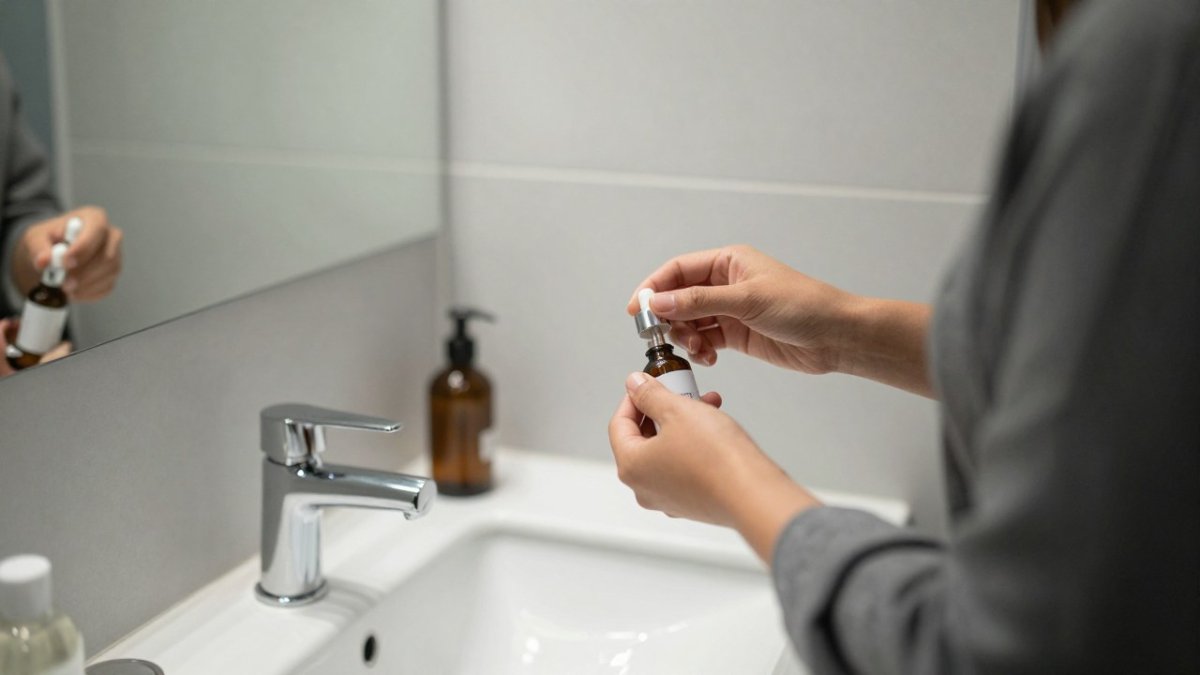
Skincare for the office environment
Office air is typically dry, and dry air pulls moisture from the skin through the day. If your skin feels tight by mid-afternoon, that is usually the environment rather than your routine failing. Two adjustments help without adding steps:
- Choose a moisturiser texture for the building, not just your skin type. If you sit in air conditioning all day, a slightly richer cream in the morning can hold up better than a light gel, even on combination skin.
- Keep a small hydrating product at your desk. A travel-sized moisturiser or a hydrating mist used once after lunch can reset the tight feeling without a full routine.
On blue light: the evidence that screen light damages skin in the same way as UV is limited, and it is not a reason to add products. The practical concern for most office workers is long indoor hours, low humidity and skipped sunscreen near windows. Treat blue light as a reason to keep your routine simple, not a reason to buy another serum.
Layering skincare under makeup without pilling
Pilling, those small rolled-up flakes of product under foundation, usually comes from layering too much, too fast, or mixing textures that do not sit well together. A few habits prevent it:
- Apply each step thinly and give it 30-60 seconds to settle before the next.
- Put heavier, silicone-rich or gel-based products last in the skincare layer, not first.
- If a serum and a moisturiser pill together, use less of each rather than adding a primer.
If you wear makeup daily, a shorter morning routine with one treatment is easier to layer cleanly than a five-step routine you are rushing through.
Travel-friendly routines
Travel stresses skin through cabin air, changed water, disrupted sleep and different humidity. The goal is not a separate travel routine but a compact version of the one you already use.
- Decant, do not duplicate. Small refillable bottles of your usual cleanser, moisturiser and sunscreen keep the routine familiar and fit airline liquid limits.
- Keep one treatment, not three. Travel is not the moment to introduce a new active, your skin is already adjusting to a new environment.
- Pack a richer moisturiser for flights. Cabin air is dry, and a slightly heavier cream applied before boarding and again mid-flight helps skin feel less tight on arrival.
- Sunscreen still applies. A window seat on a daytime flight is extended UV exposure; treat it like any other day outdoors.
Mid-day touch-ups that take under a minute
- Blot excess oil with a tissue rather than adding powder over it.
- Reapply sunscreen if you are heading out at lunch, a stick or fluid formula is faster than a cream.
- A single pump of moisturiser over the top of makeup is usually counterproductive; a hydrating mist is the more practical reset.
Watch out: keeping a full second set of products at the office sounds efficient but often leads to using two routines inconsistently. A small number of refillable travel sizes that mirror your home routine is easier to maintain.
For guidance on how to apply specific Beverly Hills products, including any waiting times between steps, check the application guide rather than guessing, the right order and timing matter more than the number of products.
Keeping a Daily Skincare Routine for Glowing Skin Consistent
Consistency is the biggest factor in a routine that works. Skin rarely responds to one night of effort, so build habits that are easy to repeat.
Here are practical ways to stay on track:
- Link skincare to an existing habit. Use your products straight after brushing your teeth.
- Keep the routine short. A four-step routine is easier to maintain than a ten-step one.
- Track your routine for a month. A simple calendar tick is enough.
- Review every few months. Decide whether each product is still doing its job.
Glowing skin usually reflects hydration, good sun protection, sleep and general health, as well as skincare. Skincare alone cannot make up for poor sleep or heavy sun exposure. Set realistic goals and judge progress over several weeks.
Choosing Your Next Step: Starting Your Routine This Week
You do not need to change everything at once. Start with the essentials this week, then build from there.
- Choose a gentle cleanser and a moisturiser that suit your skin type
- Add a broad-spectrum sunscreen to your morning routine
- Pick one treatment serum for evenings
- Use the routine consistently for two to four weeks
- Review how your skin looks and feels, then adjust
If you want a clear starting point, review the application guidance for any new product before first use, and check the product details for the concentrations and ingredients listed.
A simplified routine is about making skincare manageable. Pick a few products you trust, use them consistently and give them time to show what they can do.
Frequently Asked Questions
What is the simplest most effective skincare routine?
For most people, the simplest effective routine is four steps in the morning and three at night: cleanse, treat, moisturise, and in the morning, protect with sunscreen. Sunscreen is the step most often skipped, yet it does the most to limit visible sun damage over time. Keep the number of products small, use each one consistently, and give a new product several weeks before judging it. A routine you actually follow every day will do more for your skin than a longer one you abandon after a fortnight.
What is a good skincare routine for beginners?
A good starting routine uses a gentle cleanser, a moisturiser suited to your skin type, and daytime sunscreen with SPF 30 or higher. Add one active ingredient only once the basics feel comfortable, and introduce it slowly, two or three times a week at first. Avoid starting several new products at the same time, because if your skin reacts you will not know which one caused it. Patch-testing new products on a small area of skin first is a sensible habit.
How can I build a skincare routine with the products I already have?
Start by sorting what you own into the four jobs: cleansing, treating, moisturising and protecting. Keep one product for each job, and remove the rest from your daily routine. Use cleansing and moisturising products you already like, and check that your sunscreen is broad-spectrum with SPF 30 or higher. If you own a serum or active, use it in the evening at first. You rarely need to buy anything new to simplify your routine.
What should a simple skincare routine look like for day and night?
In the morning, cleanse lightly or rinse with water, apply a moisturiser, then finish with sunscreen. In the evening, cleanse to remove sunscreen, makeup and the day's dirt, apply any treatment product you use, then moisturise. The main difference is that sunscreen belongs in the morning, while a treatment step is usually better suited to the evening. Keeping both routines to the same few products makes them easier to repeat on a busy day.
 Add mybevhills.com as a preferred source on Google →