7 Benefits of Hyaluronic Acid for Mature Skin Explained
Beverly Hills ·

Last Updated: November 21, 2026
Quick Summary
For mature skin, hyaluronic acid is best used as a hydration ingredient. It binds water to the skin's surface, which can make skin look plumper and smoother and make fine lines appear less pronounced. It does not reverse ageing or change the skin's underlying structure, so it works best alongside a moisturiser and sun protection.
- Hyaluronic acid is a humectant that attracts and binds water to the skin.
- Its visible benefit comes from surface hydration, which lasts only as long as the moisture does.
- Apply it to slightly damp skin and seal it in with a moisturiser.
- It does not fill deep lines, restore firmness or change pigmentation.
- Choose a fragrance-free formula and patch test if your skin reacts easily.
Table of Contents
- What Hyaluronic Acid Does in Mature Skin
- How Hyaluronic Acid Works on the Skin
- Hyaluronic Acid for Which Skin Type?
- How Long Does Hyaluronic Acid Take to Work?
- How to Use a Hyaluronic Acid Serum in Your Routine
- Side Effects of Hyaluronic Acid on Skin
- Choosing Your Next Step for Hydrated, Smoother-Looking Skin
- Frequently Asked Questions
What Hyaluronic Acid Does in Mature Skin
Hyaluronic acid is a naturally occurring molecule that holds water, and it is one of the most widely studied hydrating ingredients in skincare. For mature skin, the practical benefit is hydration: a serum containing hyaluronic acid can help skin look plumper, smoother and more hydrated-looking, which often makes fine lines in the eye area and around the mouth appear less pronounced.
Hyaluronic acid is a humectant, meaning it attracts and binds water. Mature skin often feels drier and looks more dehydrated than younger skin, so this property is where most of the visible benefit comes from.
How Mature Skin Differs
As skin ages, several changes affect how it interacts with topical hyaluronic acid. The skin's natural ability to hold water declines, partly because the amount of hyaluronic acid naturally present in the skin decreases over time.
These changes mean that mature skin often responds well to humectant ingredients, because the starting point is frequently dehydrated skin that lacks plumpness. A hyaluronic acid serum can help address that surface dehydration, making skin look temporarily fuller and smoother.
What Topical Hyaluronic Acid Can Help With
For mature skin, topical hyaluronic acid is best understood as a hydration support ingredient. It can help with:
- Surface dehydration, skin that feels tight, looks dull or has a rough texture often improves with consistent humectant use.
- The appearance of fine lines, when skin is well hydrated, fine lines can look less pronounced because the surface is plumper. This effect is temporary and lasts as long as the hydration does.
- Skin comfort, dry, tight-feeling skin can feel more comfortable and supple with regular hydration.
- Supporting the look of smoother texture, hydrated skin tends to reflect light more evenly, which can make the complexion look healthier.
What Topical Hyaluronic Acid Is Unlikely to Change
It is equally important to understand the limitations, particularly for mature skin:
- Established wrinkles and deep lines, topical hyaluronic acid hydrates the surface; it does not fill or restructure deeper lines. Injectable hyaluronic acid fillers used by qualified clinicians are a different treatment with different risks and duration.
- Loss of firmness and elasticity, these changes involve deeper structural components such as collagen and elastin. A hydrating serum can make skin look plumper, but it does not rebuild firmness.
- Pigmentation and uneven tone, hyaluronic acid is not a brightening or pigment-targeting ingredient.
- Permanent change to age-related texture, the benefits are maintained through continued use, not achieved once and kept.
A common pattern is that mature-skin readers expect a hyaluronic acid serum to behave like a treatment for ageing itself. In practice, it is a hydration ingredient that supports the appearance of smoother, more comfortable skin, and it works best alongside other steps such as moisturiser, sun protection and targeted actives where appropriate.
Where Beverly Hills Fits
Beverly Hills formulates a Pure Hyaluronic Acid Face Serum built on high molecular weight Sodium Hyaluronate, which is designed for surface hydration. Its fragrance-free, sensitive-skin-suitable formula is available to view here. For mature skin, this fits as a hydration step that can be layered with other products. As with any hydrating serum, the result is best understood as hydrated-looking skin rather than a permanent change in age-related texture. If you are building a mature-skin routine, the routine page explains how hydration fits alongside other steps.
How Hyaluronic Acid Works on the Skin
Hyaluronic acid works on the skin's surface layers. When applied to damp skin, it draws in water from the environment and holds it in the outermost layers, which is why applying it to slightly damp skin is commonly recommended.
Its effect is temporary and depends on continued use and on the skin's environment. Dry indoor air, heating and cold weather can reduce how much moisture the skin holds, which is one reason hydration routines matter more in winter.
It is worth separating three things: what the ingredient does, what a formulation achieves, and what a finished product has been shown to do. The research on hyaluronic acid as an ingredient is reasonably strong for hydration. How any specific product performs depends on its full formulation, which is why reading the ingredient list and published concentrations is useful.
Why Molecular Weight Matters
Hyaluronic acid comes in different molecular weights, and the size of the molecule influences where it acts and how it feels. High molecular weight hyaluronic acid tends to sit on the surface of the skin and form a hydrating film, while low molecular weight forms are sometimes described as penetrating deeper into the upper layers.
Beverly Hills uses high molecular weight Sodium Hyaluronate in its Pure Hyaluronic Acid Face Serum, which is positioned for surface hydration and a smoother-looking finish.
Hyaluronic Acid for Which Skin Type?
Hyaluronic acid is generally suited to many skin types, because it is water-based and non-greasy. Dry and dehydrated mature skin often benefits most, since the goal is adding moisture.
Fragrance-free formulas are a sensible starting point if your skin reacts easily. Patch testing a new serum on a small area of skin for a few days before full use is a practical precaution. If irritation, redness or stinging develops, stop using the product and speak to a qualified healthcare professional if it persists.
How Long Does Hyaluronic Acid Take to Work?
The hydrating effect of a hyaluronic acid serum is usually noticeable soon after application, because the skin starts to feel softer and look plumper within minutes. This immediate effect is the moisture being bound to the surface, not a structural change.
Longer-term benefits, such as skin that consistently looks more hydrated and smoother over several weeks, depend on continued daily use and the rest of your routine. Realistic expectations matter here.
How to Use a Hyaluronic Acid Serum in Your Routine
Apply hyaluronic acid serum after cleansing and toning, while the skin is still slightly damp, since this helps the ingredient draw in water. Use it before heavier products, following a thinnest-to-thickest order, and seal it with a moisturiser to help keep the hydration in place.
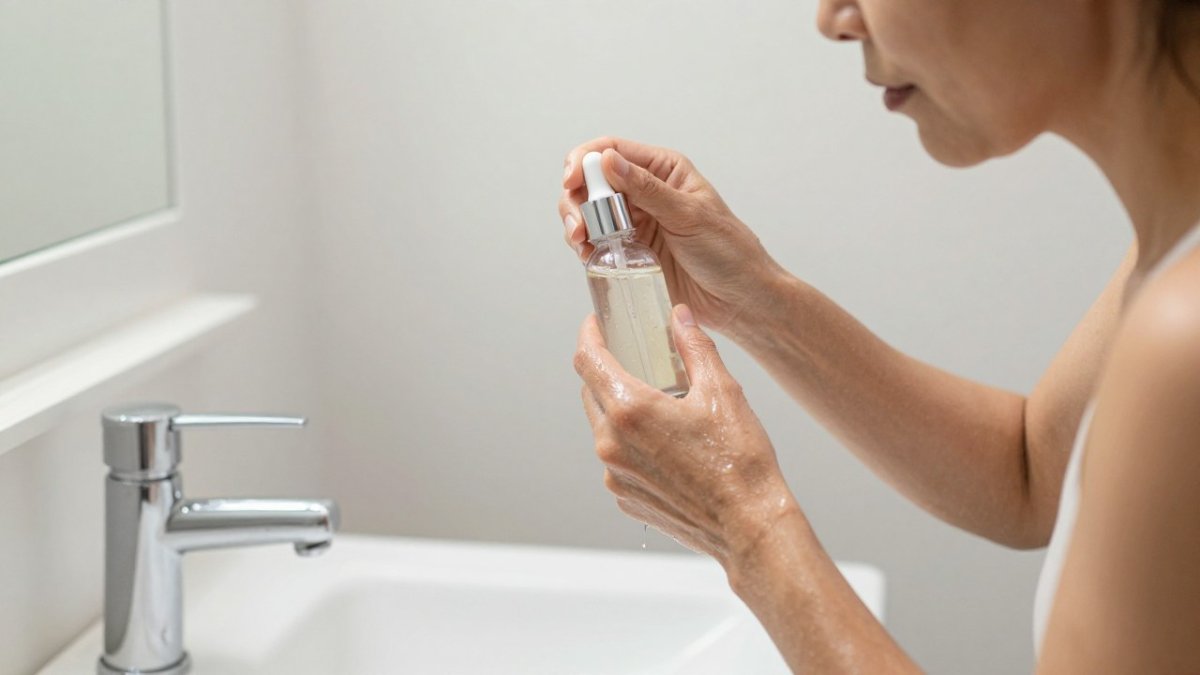
A simple routine might look like this:
| Step | Product type | Purpose |
|---|---|---|
| 1 | Gentle cleanser | Removes dirt without stripping moisture |
| 2 | Hyaluronic acid serum | Adds water to skin while damp |
| 3 | Moisturiser | Helps seal in hydration |
| 4 | Sunscreen (morning) | Protects against UV exposure |
For a full ordering guide covering morning and evening routines, see the routine page. Our application guide explains how to apply a serum correctly, and you can view our Pure Hyaluronic Acid Face Serum for a fragrance-free option suited to sensitive skin.
Applying Hyaluronic Acid in Dry Climates and Indoor Heating
One of the most common practical challenges with hyaluronic acid is low humidity. In dry climates, during winter, or in centrally heated or air-conditioned rooms, the air holds less water.
The practical solution is straightforward: always follow hyaluronic acid with a moisturiser that contains occlusive or barrier-supporting ingredients. These help form a layer that reduces water loss from the skin surface.
Layering Hyaluronic Acid with Other Actives
Mature-skin routines often include several products, and hyaluronic acid generally layers well with most ingredients. Here is how it fits with common actives:
- Retinoids, apply hyaluronic acid before or after your retinoid, depending on the product's instructions. A hydrating serum can help support skin comfort when using retinoids, which sometimes cause dryness or flaking. If you are new to retinoids, a common approach is to use hyaluronic acid in the same routine to support hydration.
- Exfoliating acids (AHA/BHA), hyaluronic acid can be used in the same routine as exfoliating acids. Some people prefer to apply it after acid toners to support hydration. If skin feels sensitive, alternating rather than layering may be more comfortable.
- Vitamin C, hyaluronic acid and vitamin C can be layered. A common order is vitamin C serum first, then hyaluronic acid, then moisturiser. Both are water-based and generally compatible.
- Barrier-supporting moisturisers, these are the ideal partner for hyaluronic acid, since they help seal in the hydration the serum has drawn to the surface.
If you are using several actives and are unsure about ordering, the actives page explains how different ingredients fit together. As a general principle, introduce one new product at a time and allow skin to adjust before adding another.
Morning Versus Evening Use
Hyaluronic acid is suitable for both morning and evening use. In the morning, it sits well under sunscreen and makeup, since it is lightweight and water-based. In the evening, it can be used after cleansing and before a richer night moisturiser. Some people prefer to use it twice daily, while others use it once.
A layered hydration routine pairing hyaluronic acid with vitamin C and a cell repair cream is also available if you want a broader approach that combines hydration with other steps.
Side Effects of Hyaluronic Acid on Skin
Topical hyaluronic acid is generally well tolerated, and serious side effects are uncommon. The most likely issues are mild irritation, redness or a sticky feeling, which are more often linked to the other ingredients in a formula than to hyaluronic acid itself.
Stop using any product that causes persistent discomfort, and seek advice from a healthcare professional if you have a skin condition or concerns about a reaction.
Choosing Your Next Step for Hydrated, Smoother-Looking Skin
Explore the Beverly Hills range to find a formula that suits your skin, or visit the routine page to see how it fits into your daily steps.
Frequently Asked Questions
Does hyaluronic acid reduce wrinkles? Hyaluronic acid can help skin look plumper and more hydrated, which may make fine lines appear less noticeable.
Can I use hyaluronic acid every day? Many people use hyaluronic acid serum daily, morning and evening, as part of a routine.
Should I apply hyaluronic acid to wet or dry skin? Applying it to slightly damp skin is commonly recommended, since the ingredient draws in water.
Frequently Asked Questions
Is hyaluronic acid good for 70-year-old skin?
Hyaluronic acid is generally considered suitable for mature skin because it is a humectant that helps skin hold water. Many people over 70 use it to support hydrated-looking skin and a smoother surface. It does not repair structural ageing or permanently change fine lines. Because skin becomes thinner and more sensitive with age, it is sensible to patch test a new serum on the jawline or behind the ear first, and to stop if irritation develops. If you have a skin condition or take medication that affects the skin, speak to a pharmacist or doctor before starting a new routine.
Can hyaluronic acid make skin feel dry?
Hyaluronic acid attracts water, so in very dry air it can draw moisture from deeper skin layers if it is not sealed in. Applying it to damp skin and following it with a moisturiser helps keep hydration in place. Using it in a dry, heated room without a moisturiser may leave skin feeling tight. If your skin feels drier after use, try applying a moisturiser on top, reduce how often you use the serum, or switch to a formula that also contains emollients.
What should you avoid mixing with hyaluronic acid?
Hyaluronic acid is generally compatible with most skincare actives, and it is often layered with vitamin C, niacinamide and retinoids. The main practical guidance is to avoid layering it over strong acids or exfoliants if your skin feels sensitive, and to keep your routine simple while you assess how your skin responds. Layer from thinnest to thickest texture, and apply a moisturiser last to help seal in water. Read each product's own instructions, as formulas differ.
Which type of hyaluronic acid serum is suitable for mature skin?
Serums that combine hyaluronic acid of different molecular weights are often chosen for mature skin, because smaller molecules are thought to penetrate the outer layers while larger ones sit on the surface to bind water. The published evidence on the exact benefit of each molecular weight is limited, so the most useful test is how your skin feels after several weeks. Look for clearly stated concentrations and a fragrance-free or low-irritant formula if your skin is sensitive.
 Add mybevhills.com as a preferred source on Google →